


(727)-510-7070 or (727) 559-7180
A damaged concrete pool deck is more than just an appearance issue. Cracks, uneven surfaces, stains, and drainage problems can create safety hazards and lead to costly repairs if left untreated. If you own a concrete pool deck in Clearwater, FL, understanding the most common problems and how to prevent them can help protect your investment and keep your outdoor space safe and attractive for years to come.
At Sunsation Pools & Spas, homeowners throughout Clearwater and the surrounding Tampa Bay area rely on experienced pool professionals for pool renovations, resurfacing, decking solutions, and long-term maintenance. Knowing what causes pool deck damage is the first step toward avoiding expensive repairs.
Key Takeaways
- Soil Movement Drives Damage: Cracks in a pool deck often result from soil movement, weather changes, or improper installation.
- Drainage is Critical: Poor drainage can weaken the ground beneath concrete and contribute to settlement issues.
- Proactive Maintenance Saves Money: Regular cleaning and sealing help extend the life of a concrete pool deck.
- Early Action Prevents Spreading: Early repairs are typically less expensive than waiting for damage to spread.
- Expert Eyes Catch Anomalies: Professional inspections can identify hidden issues before they become major structural concerns.
Why Pool Deck Problems Develop
Pool decks are exposed to constant moisture, Florida heat, heavy foot traffic, and shifting soil conditions. Over time, these factors place stress on the concrete surface. The reality on the ground is that the constant shifting of Florida’s sandy sub-base accelerates sub-surface erosion.
While concrete is durable, it is not immune to wear and tear. Small issues often start unnoticed and gradually become larger problems that affect safety, functionality, and curb appeal. Understanding the warning signs can help homeowners take action before repairs become more extensive.
Why is My Concrete Pool Deck Cracking?
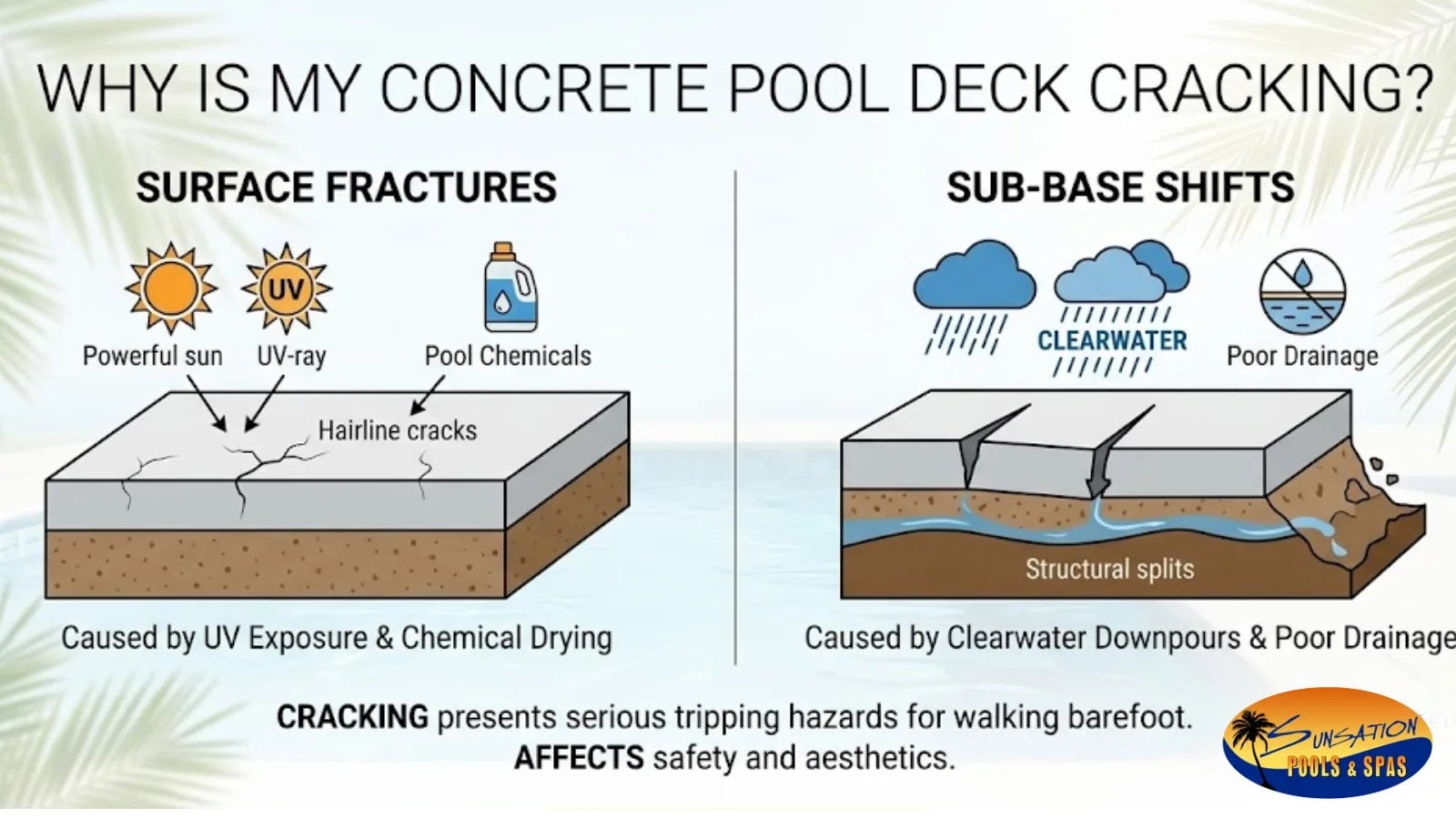
Cracking is one of the most common issues affecting a concrete pool deck, often triggered by shifting soil matrixes or thermal expansion pressure. When fractures appear, they range from hairline surface fissures to deep, structural splits that present serious tripping hazards for anyone walking barefoot around the pool area.
(727)-510-7070 or (727) 559-7180
Common Causes of Cracks
- Sub-Base Settlement: Shifting soil settlement beneath the heavy concrete slab removes critical load-bearing support.
- Hydraulic Pressure Changes: Excess moisture changes in the ground cause the earth to swell and contract violently.
- Subterranean Root Intrusion: Fast-growing tree root growth wedges beneath the slab, forcing sections upward.
- Mechanical Overload: Heavy loads or impact damage from heavy equipment or structural additions exceed weight limits.
- Substandard Subgrade Preparation: Improper concrete installation without correct rebar reinforcement or compaction weakens the deck.
- Material Fatigue: Natural aging of the material degrades the internal binding agents over decades.
Small cracks may appear harmless at first. However, water can enter these openings and gradually worsen the damage. During periods of heavy rain, moisture infiltration can weaken the supporting soil and cause additional movement.
Prevention Tips
- Correct Grade Slopes: Address drainage issues promptly to stop sub-surface erosion dead in its tracks.
- Apply High-Polymer Sealants: Seal cracks as soon as they appear to block moisture paths.
- Establish Monitoring Routines: Schedule routine inspections to track minor movement before it escalates.
- Create Root Barriers: Remove nearby roots that threaten the slab or install mechanical barriers.
- Hire Certified Slab Builders: Ensure new installations are performed by qualified professionals who understand local water tables.
What Causes Uneven or Sinking Concrete Slabs?
A sinking pool deck can create dangerous trip hazards and affect the overall appearance of your backyard, usually indicating a failure of the subgrade. Concrete settlement usually occurs when the soil underneath loses its ability to support the slab. In Clearwater, frequent rainstorms and changing moisture levels can contribute to soil movement.
Warning Signs
- Vertical Slab Displacements: Differential settlement where sections of concrete sitting lower than others create exposed edges.
- Hydraulic Pooling Zones: Standing water near the pool that fails to migrate toward designated deck drains.
- Separated Control Joints: Visually distinct gaps between slabs that widen after heavy downpours.
- Noticeable Sloping Surfaces: Structural pitch changes where the deck actively leans toward or away from the pool shell.
- Joint Trip Hazards: Abrupt elevation changes and trip hazards around deck joints that catch toes easily.
Prevention Tips
Maintaining proper drainage is one of the most effective ways to prevent settlement. Water should flow away from the pool deck rather than collecting underneath it. Professional evaluations can also identify developing settlement problems before they become severe.
Why is the Surface of My Deck Flaking and Peeling?
Spalling occurs when the top layer of concrete begins to chip, peel, or flake away, typically because the top paste layer separates from the aggregate. While it may start as a cosmetic concern, spalling can eventually weaken the surface and make the deck uncomfortable to walk on.
Causes of Surface Damage
- Delamination from Water Intrusion: Unchecked moisture penetration breaks down the chemical bonds near the surface layer.
- Over-Troweling During Placement: Improper finishing techniques that draw too much water to the surface during installation.
- Corrosive Chemical Exposure: Spilled pool chemicals and aggressive sanitizers eat away at the unsealed lime matrix.
- Carbonation and Aging: Naturally aging concrete loses its internal pH and structural cohesion over long periods.
- UV Degradation: A total lack of protective sealing leaves the raw concrete defenseless against intense Florida sun.
Pool chemicals can gradually affect concrete surfaces when spills occur regularly or when water chemistry is not properly balanced.
Prevention Tips
- Neutralize Corrosive Spills: Clean spills quickly with fresh water to stop chemical burning.
- Balance Langelier Saturation Index: Maintain proper pool chemistry to ensure splash-out water isn’t aggressive.
- Apply Breathable Silane Sealers: Apply a quality concrete sealer every few years to shield the outer pores.
- Engage Surface Restorations: Schedule periodic professional maintenance to grind down and seal vulnerable areas.
How Does Poor Drainage Threaten My Pool Surround?
Many homeowners underestimate the impact of drainage problems, which actively destroy pool decks by allowing standing water to erode the foundation. Water that consistently pools around a concrete pool deck can accelerate cracking, settlement, and surface deterioration. Over time, excess moisture may even affect nearby structures and landscaping.
Signs of Drainage Issues
- Persistent Standing Puddles: Noticeable standing water after rainfall that remains stagnant for over two hours.
- Saturated Soil Pockets: Soft, muddy areas around the deck perimeter that never fully dry out between storms.
- Subgrade Washouts: Visible erosion near concrete edges where soil has been physically swept away by runoff.
- Reverse Grade Runoff: Rainwater flowing toward the home foundation rather than out into specified drainage basins.
- Accelerated Fracture Growth: Rapidly increased cracking over time due to localized hydrostatic pressure spikes.
Prevention Tips
Proper grading is essential. Water should move away from the pool and surrounding structures. Regularly cleaning drains and ensuring gutters direct water away from the deck can also help reduce moisture-related damage.
How Do I Eliminate Stains and Discoloration?
Pool decks naturally experience exposure to water, dirt, leaves, sunscreen, and pool chemicals, which chemically bind to the porous unsealed concrete. Over time, these substances can leave deep-seated stains that affect the appearance of the deck.
Common Types of Stains
- Oxidized Mineral Runoff: Reddish-brown rust stains from metallic lawn furniture or high-iron well water irrigation.
- Microbial Infestations: Black and green algae growth feeding on trapped moisture within unsealed pores.
- Tannin Infiltration: Stubborn organic stains from leaves, pine needles, and organic debris left rotting on the deck.
- Muriatic Acid Burns: Permanent chemical discoloration from unbalanced chemical applications or spills.
- Calcium Scaling: White, chalky hard water deposits left behind as pool water evaporates under the sun.
Although staining does not always indicate structural damage, it can make a pool area appear neglected.
Prevention Tips
- Pressure Wash Surface Biweekly: Clean the deck regularly to dislodge embedded environmental grime.
- Clear Organic Material Daily: Remove leaves and debris promptly before organic tannins can leach into the concrete.
- Apply Algaecide Washes: Address algae growth early using target-specific microbial shock formulas.
- Deploy Alkaline Cleaners: Use products approved for concrete surfaces to lift oils without etching the stone.
Routine maintenance is often the simplest way to preserve the appearance of your outdoor living space.
What Happens When Pool Expansion Joints Fail?
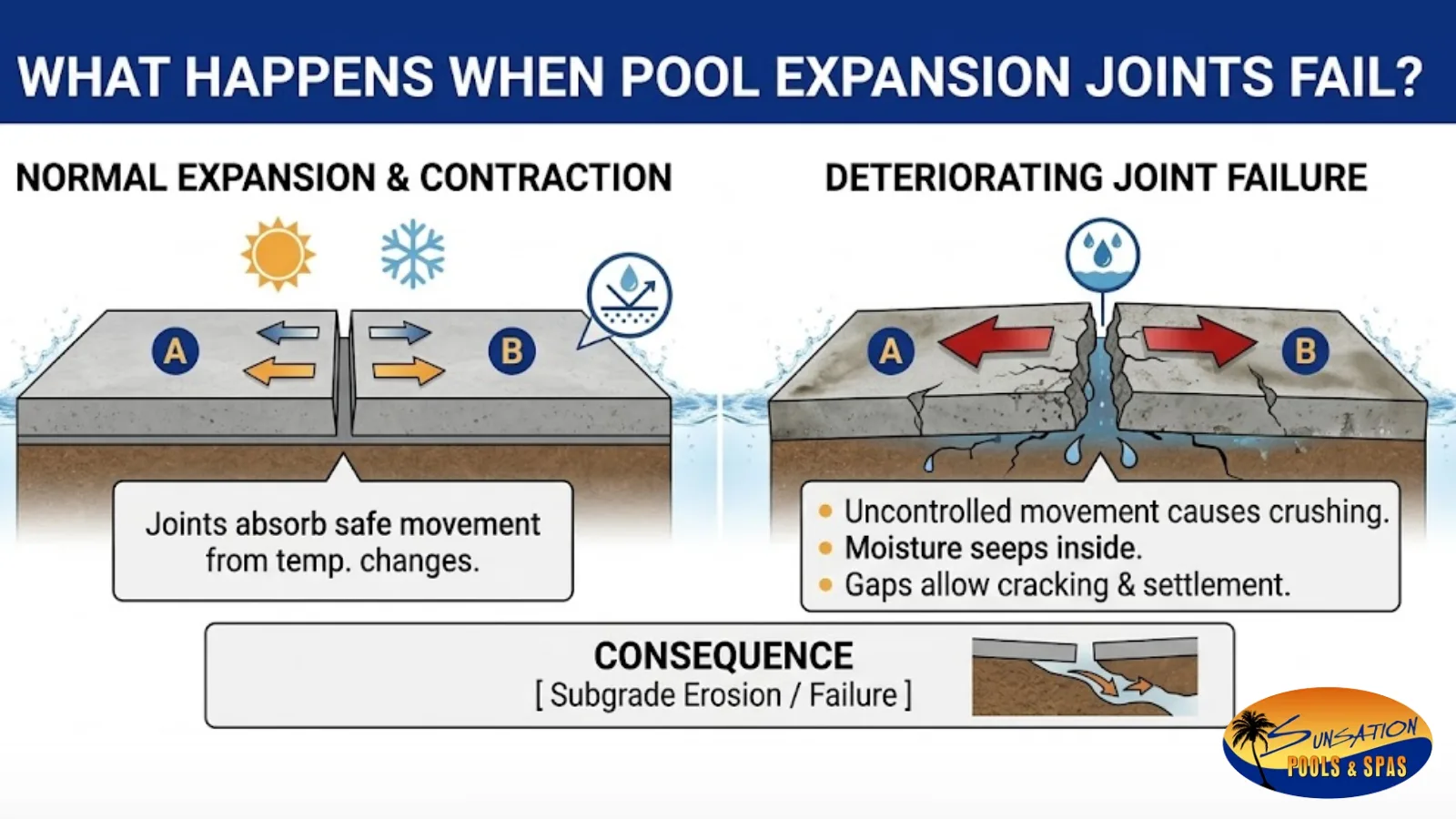
Expansion joints allow concrete to expand and contract safely as temperatures fluctuate, acting as a crucial relief valve for internal stress. When these joints deteriorate, moisture can enter the gaps and contribute to cracking or settlement.
(727)-510-7070 or (727) 559-7180
Signs of Joint Failure
- Empty Expansion Gaps: Missing filler material or decayed mastic foam that has completely disintegrated over time.
- Spalled Joint Shoulders: Spalling and crumbling joint edges caused by adjacent slabs rubbing together without a buffer.
- Vegetative Infiltration: Aggressive weed growth between slabs that forces the joints wider apart.
- Sub-Slab Infiltration Points: Water collecting in joints instead of running off into the designated perimeter drains.
Prevention Tips
Inspect expansion joints annually and replace damaged materials before water intrusion becomes a larger issue.
How Can Professional Pool Deck Services Restore My Property?
| Traditional DIY Fixes | Professional Structural Restorations |
| Surface-Level Caulk: Temporary fixes that trap moisture underneath the slab. | Polymetric Injections: Dense leveling foams that stabilize the sub-base permanently. |
| Store-Bought Patching: Shrinks and pops out during hot weather cycles. | Industrial Overlays: High-strength polymer modifications that bond at a molecular level. |
| Standard Bleach Washing: Fails to kill subsurface fungal roots within the stone. | Deep Antimicrobial Treatments: Complete removal of organic matter followed by commercial sealing. |
Many concrete problems share the same underlying causes, including soil movement, water intrusion, and aging materials. Professional pool contractors can evaluate the condition of your deck and recommend solutions tailored to your property’s specific needs.
At Sunsation Pools & Spas, property owners in Clearwater, FL trust experienced professionals for pool renovations, resurfacing projects, decking improvements, and outdoor living enhancements. Their knowledge of local conditions helps ensure long-lasting results that stand up to Florida’s climate.
Contextual Topic Clusters
🛡️ Risk Mitigation
- Slab Leveling Inspections: Catch sub-base failures before structural separation breaks your pool tile lines.
- Slip-Resistant Texturing: Apply knock-down finishes to prevent slick surfaces when the deck is saturated with water.
- Sulfide Attack Defense: Seal out brackish coastal water to stop internal rebar corrosion.
⚙️ Technical Execution
- Mastic Joint Replacement: Install commercial-grade polyurethane self-leveling sealants in all control joints.
- Acrylic Polymer Overlays: Application of modified cements that flex with thermal movement instead of snapping.
- Sub-Surface French Drains: Divert downspout water completely away from the pool deck footprint.
Multi-Layered Entity Bullets
- Hydrostatic Pressure: The hydraulic force exerted by groundwater against the underside of the concrete slab, causing upwards lifting.
- Concrete Spalling: The mechanical breaking down or flaking of the concrete’s top layer due to internal freeze-thaw or chemical intrusion.
- Polyurethane Mastic: A highly elastic, commercial sealant used to fill expansion joints to prevent horizontal water migration.
- Subgrade Compaction: The mechanical stabilization of soil beneath a deck to eliminate void spaces that cause structural settling.
- Polymer-Modified Overlay: A thin, engineered layer of concrete mixed with specialized plastics designed to bond to damaged slabs.
🏡 Homeowner Perspective
Pro Tip: Here is something most contractors won’t mention: don’t let anyone put a non-breathable solvent sealer over a damp deck during hot Clearwater afternoons. The trapped moisture will turn to steam under the intense sun, blowing the new coating right off the concrete in ugly white blisters. Always verify the moisture content of the slab before sealing.
Mastering the Future of Your Pool Deck Strategy
The health of your outdoor living space depends entirely on maintaining structural equilibrium beneath your feet. Ignoring small cracks or minor drainage failures always invites extensive, high-ticket foundation repairs down the road. By implementing a proactive sealing regimen and addressing subgrade shifts early, you protect both your home’s equity and your family’s safety.
Take control of your backyard maintenance before the summer storm season arrives. Explore our deep-dive guide on pool renovations or secure an expert backyard assessment by calling our Clearwater team at (727) 510-7070 for a real-deal consultation and how we can build one for you. Visit our website and contact us today!
Frequently Asked Questions
Q: How long does a concrete pool deck typically last?
A: A properly installed concrete pool deck lasts 20 to 30 years if sealed every three years. The exact lifespan depends heavily on subgrade soil compaction, proper drainage channels, and local climate stresses.
Q: What causes concrete around pools to crack?
A: Cracks develop when shifting sandy soils erode or when thermal expansion stresses exceed concrete strength. Tree root intrusion and improper placement of structural control joints also accelerate structural fractures.
Q: Can small pool deck cracks be repaired?
A: Yes, small cracks can be structurally repaired using low-viscosity polymer injections before they spread. Early intervention keeps water out of the sub-base, stopping systemic slab sinking.
Q: How often should a pool deck be sealed?
A: Most concrete decks require commercial-grade resealing every two to three years under Florida sun conditions. Failing to seal allows chemical splash-out and UV rays to degrade the top paste layer.
Q: Why does water collect on my pool deck after it rains?
A: Pooling water points to poor initial grading or localized concrete slab settlement creating low spots. Blocked perimeter deck drains or settled expansion joints will also trap rainwater on the surface.