


(727)-510-7070 or (727) 559-7180
Whether you want to rescue your swimming pool from a chilly cold snap or extend your swimming season well into the cooler months, a pool heater is your best friend. At Sunsation Pools & Spas., we often explain that, at its core, a pool heater works as a critical extension of your pool’s existing filtration loop. Instead of sitting inside the pool itself, the heater waits outside the tank, catching the water after it has been cleaned and warming it up before sending it right back to your swimming area.
Key Takeaways
- Pool heaters warm water by moving it through your pool’s circulation system.
- The heater works after filtration, not inside the pool itself.
- Heat pumps use outside air to efficiently warm pool water.
- Gas heaters heat water quickly, even in cold weather.
- Electric heaters are best for small pools and steady temperature control.
- Pool covers can significantly reduce heat loss and lower energy costs.
The Basic Circulation Loop
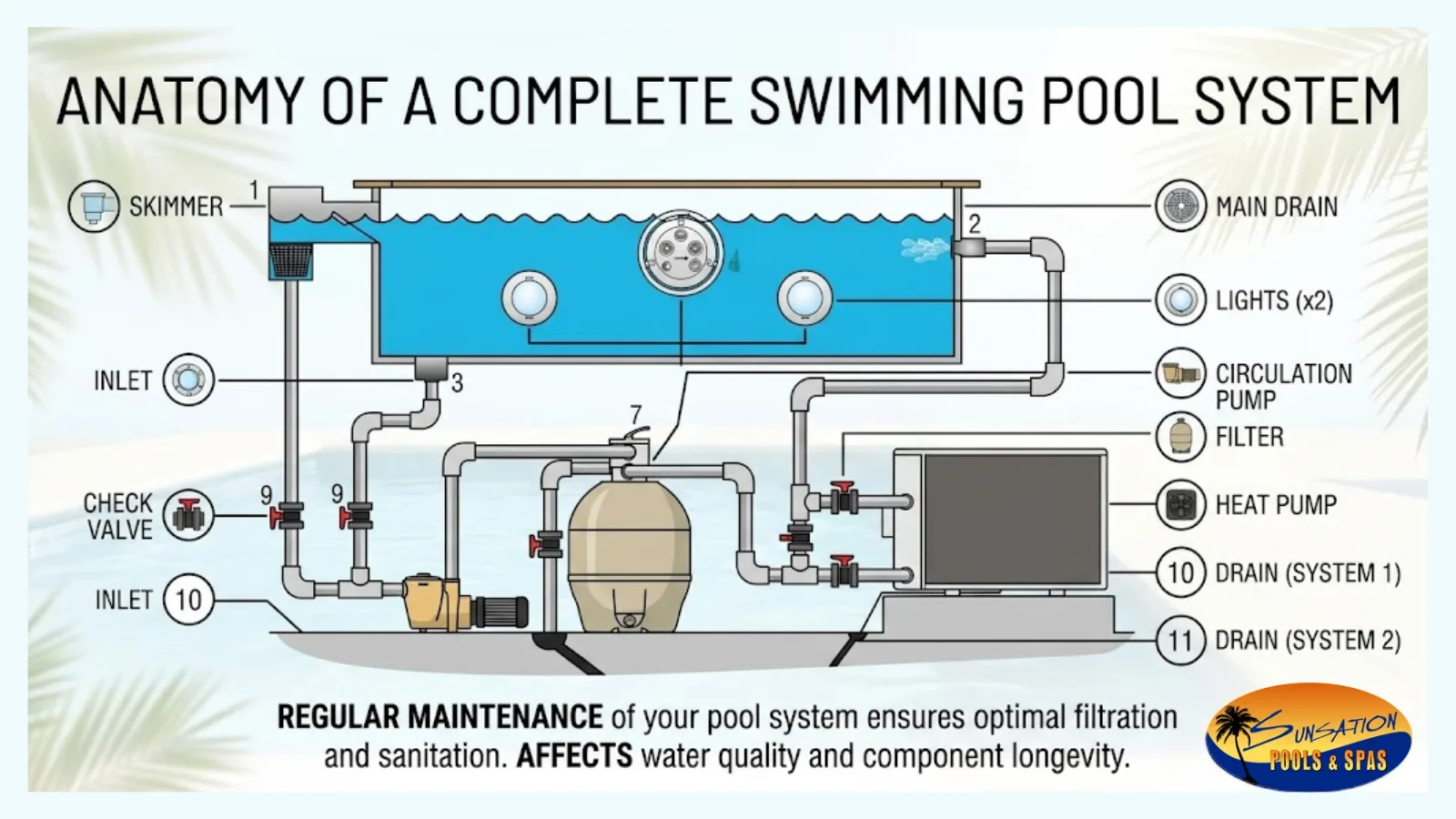
To understand how does a pool heater work, you first have to look at the flow of your pool’s plumbing system. Water doesn’t just sit statically inside the heater; it has to be actively pushed through it.
- Extraction: The circulation pump (6) pulls chilly water from the pool via the skimmer (1) and main drain (2).
- Filtration: The pump pushes that water through the main filter (7) to strip away dirt, leaves, and debris.
- Heating: The freshly cleaned water passes directly into the heat pump/heater (8) via the “In” pipe. Inside, heat transfer takes place, raising the temperature.
- Return: The newly warmed water exits via the “Out” pipe and streams through the return inlet (3) back into the main pool basin.
(727)-510-7070 or (727) 559-7180
How Different Heaters Generate Heat
While the plumbing loop remains the same across virtually all backyards, how that machine actually generates its thermal energy depends entirely on the type of unit you install. The three main technologies handle this heat transfer through entirely distinct scientific processes.
1. Pool Heat Pumps (The Air-Sourcing Efficiency Champions)
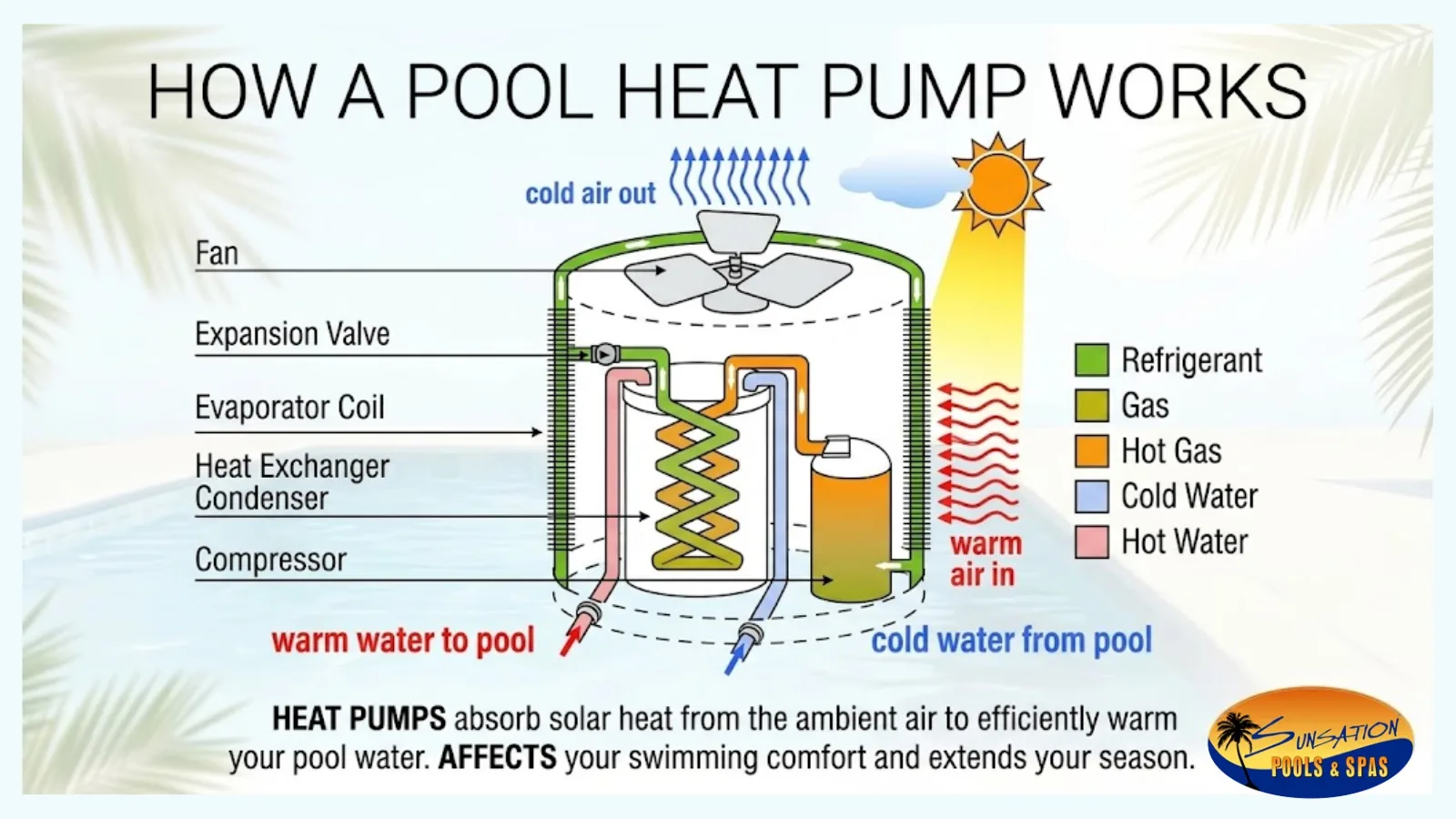
Heat pumps are highly popular in warm, humid climates like Clearwater, FL, because they don’t actually expend massive energy to create heat. Instead, they act like an air conditioner working in reverse, harvesting existing warmth out of the ambient air and moving it into your water, which helps explain how does a pool heater work.
(727)-510-7070 or (727) 559-7180
- A large fan draws in the warm surrounding air across an evaporator coil filled with liquid refrigerant. The warmth from the air causes the refrigerant to boil and turn into a gas.
- This gas travel straight into a compressor, which squeezes the gas tightly. Compressing a gas packs its molecules together, causing its temperature to skyrocket.
- The super-hot gas moves into the heat exchanger condenser. Here, the chilled pool water wraps around the hot coils, absorbing the heat directly.
- The water warms up and heads to the pool, while the refrigerant cools down, passes through an expansion valve, and resets to start the loop over again.
2. Gas Pool Heaters (The Speed Demons)
Gas heaters rely on true combustion. They burn either natural gas or liquid propane inside an enclosed combustion chamber.
- The burning gas creates a high-intensity flame that rapidly heats a heavy-duty metal heat exchanger.
- As the pool water flows through the tightly wound copper or cupro-nickel tubes inside that exchanger, it directly absorbs the raw thermal energy.
- The Big Benefit: They heat water incredibly fast, regardless of how cold it is outside. This makes them perfect for quick turnarounds, like heating a cold spa or warming up a pool for a weekend party.
3. Electric Resistance Heaters (The Small-Scale Dependables)
Electric resistance heaters operate similarly to a giant home toaster or a standard kitchen kettle.
- Electricity flows directly into heavy-duty internal heating elements, creating intense thermal resistance that turns the metal hot.
- Water runs right over these hot elements, soaking up the heat directly.
- Because they require a massive amount of electrical current to heat large volumes of water, they are usually reserved for smaller above-ground pools, detached hot tubs, or therapy spas where maintaining a precise, steady temperature is the primary goal when explaining how does a pool heater work.
Finding Your Perfect Match
Choosing between these systems comes down to analyzing your pool’s size, your budget, and how you plan to swim.
| Heater Type | Best For | Pros | Cons |
| Heat Pump | Constant, regular pool use in warm-to-moderate climates. | Lowest monthly operating costs; highly eco-friendly; long lifespan. | Higher upfront cost; heats slowly; slows down if air drops below 50°F. |
| Gas Heater | On-demand heating, spontaneous weekend use, or standalone spas. | Heats up water incredibly fast; works perfectly in freezing weather. | High monthly fuel costs; lower energy efficiency ratings; requires gas lines. |
| Electric Resistance | Smaller setups, swim spas, and small therapy tubs. | Lower initial installation complexity; small footprint; very reliable. | High electricity consumption; expensive to run on full-sized backyard pools. |
Pro Tip to Save Money: No matter what type of heater you run, up to 70% of a pool’s total heat loss happens right at the surface due to evaporation. Rolling out a simple pool cover or thermal blanket on cool nights acts like a lid on a boiling pot, trapping that expensive warmth inside and cutting your energy bills in half.
Need Help Upgrading Your Setup?
If you are looking to install a new heating system or want to optimize your current equipment for maximum energy efficiency, the team at Sunsation Pools & Spas, Inc. is here to help. We guide homeowners throughout the Clearwater, FL area in selecting, sizing, and professionally maintaining high-performance pool systems.
Give us a call today at (727) 510-7070 or visit our office to find the absolute best heating blueprint for your backyard oasis! Visit our website and contact us today!
Frequently Asked Questions
Q: Which pool heater is the most energy efficient?
A: Heat pumps are generally the most energy efficient in warm climates.
Q: Do gas heaters heat pools faster than other types?
A: Yes, gas heaters provide the fastest heating performance.
Q: Are electric pool heaters good for large pools?
A: They are better suited for small pools or spas due to higher energy use.
Q: Why is my pool heater not heating properly?
A: Common causes include dirty filters, low water flow, or system wear.
Q: Can a pool cover really reduce heating costs?
A: Yes, it helps reduce evaporation and retain heat, lowering energy use.
