


(727)-510-7070 or (727) 559-7180
Proper care after a new finish is one of the most critical, yet frequently overlooked, steps in protecting your commercial property’s infrastructure. After completing a commercial pool resurfacing project, the newly applied materials require relentless attention during the early stages to prevent premature wear, deep-seated staining, or permanent structural damage. For property owners and facility managers in Largo, Florida, partnering with a vetted, high-end specialist like Sunsation Pools & Spas, Inc. ensures the physical application is flawlessly executed and backed by precise, scientifically sound post-fill protocols.
Whether your facility features a traditional cementitious plaster or utilizes advanced, high-performance coatings like ecoFINISH, the initial weeks following water immersion dictate the material’s ultimate lifespan and long-term aesthetic performance.
Key Takeaways
- Navigate the 30-Day Window: Treat the first month as a critical curing phase that establishes the molecular density and structural longevity of the finish.
- Master the Chemical Matrix: Execute a meticulous water balancing strategy to eliminate early calcium scaling and aggressive aggregate erosion.
- Employ Technical Brushing Routines: Utilize targeted brush selections to shear off surface dust without scoring the delicate, settling material.
- Differentiate Material Protocols: Apply distinct post-fill maintenance tracks for traditional marcite versus advanced polyurea thermal coatings.
- Mitigate Long-Term Capital Costs: Implement rigorous, documented daily maintenance logs to eliminate premature structural degradation and unexpected structural repairs.
Why Immediate Post-Resurfacing Asset Management Matters
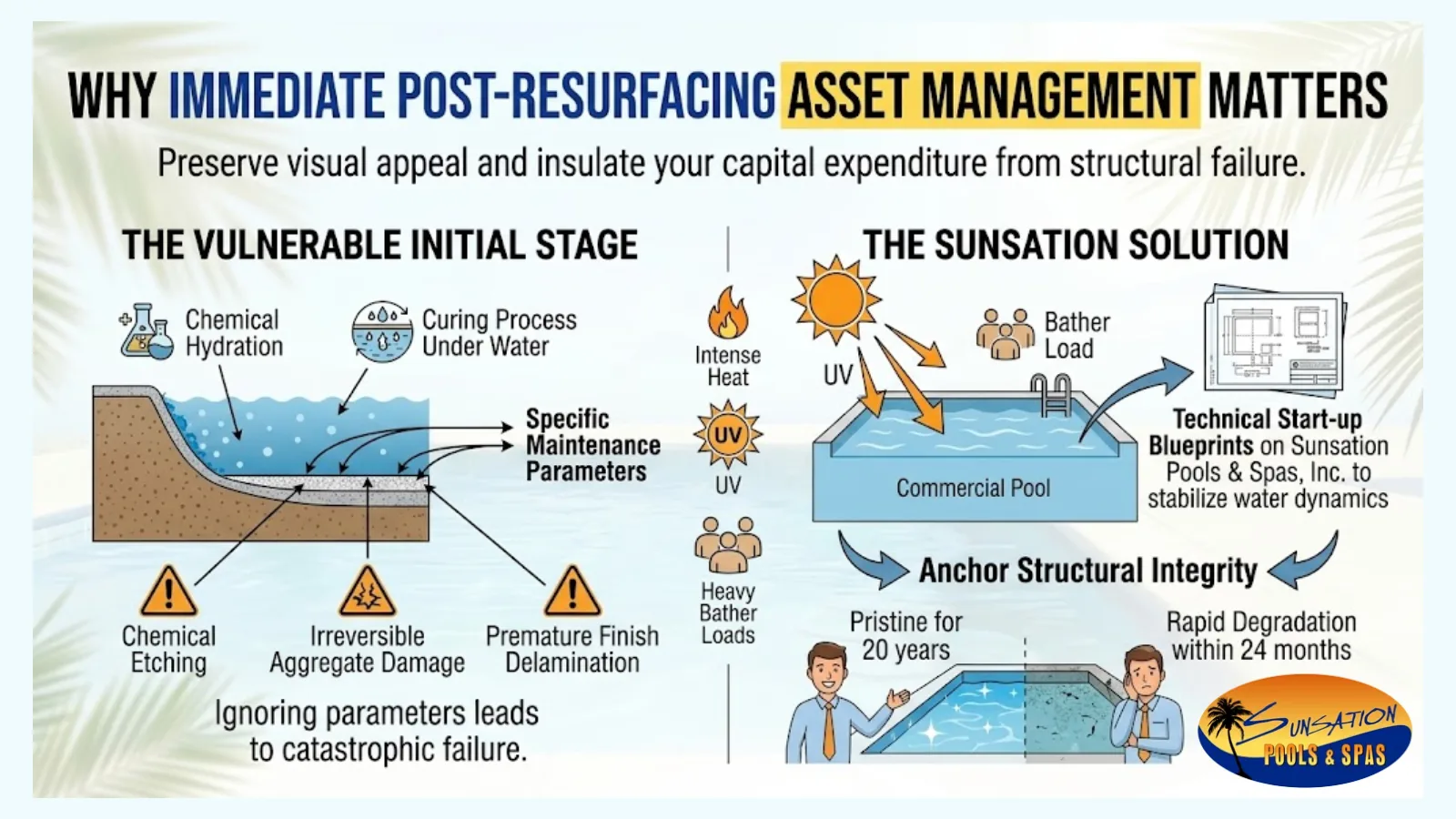
How post-resurfacing management is executed decides whether your capital asset remains pristine for 20 years, or experiences such rapid degradation that it exceeds a catastrophic failure point within 24 months. The water that looks so sparklingly clear right after a commercial pool resurfacing treatment is hiding lots of complexities that the substrate is going through, an extensive chemical hydration and curing process under the water. Ignoring specific maintenance parameters at this vulnerable time can lead to chemical etching, irreversible aggregate damage and premature finish delamination.
The reality on the ground in Largo, Florida, is that intense sub-tropical heat, relentless UV radiation, and heavy commercial bather loads rapidly accelerate chemical imbalances if the water matrix is left unmanaged. Property managers cannot manage a freshly finished commercial basin with the same routine applied to an established, chemically stable facility. This is precisely why premier operations across Pinellas County rely on the technical start-up blueprints engineered by Sunsation Pools & Spas, Inc. to stabilize water dynamics and anchor the structural integrity of the finish the moment the refilling process concludes. A rigid, uncompromising maintenance routine does far more than preserve visual appeal; it insulates your capital expenditure from structural failure.
(727)-510-7070 or (727) 559-7180
The First 30 Days: A Day-by-Day Operational Breakdown
The first 30 days require more intensive, highly structured, and daily interventions simply because the underneath pool finish is still curing, hardening (or actually fluid) as well as settling under the hydraulic pressure. Cementitious surfaces are still pliable below the immediate surface layer for weeks after being set, making them very susceptible to physical gouging and sudden water fluctuations.
The operational requirements of the first month differ greatly depending on what your water asset is made out of:
Traditional Plaster and Exposed Aggregate Finishes
- Manage Hydration Curing: Allow the plaster matrix a full 28 to 30 days of uninterrupted underwater hydration to reach its peak structural compressive strength.
- Eliminate Plaster Dust: Mandate twice-daily brushing routines with heavy-duty nylon brushes to shear away migrating calcium hydroxide before it scales back onto the walls.
- Execute Aggressive Chemistry Tracking: Test water parameters daily to counteract the sharp, natural spikes in pH triggered by the curing cement matrix.
Advanced ecoFINISH Polyurea Coatings
- Monitor Thermal Curing: Trust the specialized, thermal-spray polymer which cross-links instantly during application, effectively bypassing long underwater curing timelines.
- Accelerate Facility Reopening: Return the facility to active commercial bather tracking and standard chemical loads significantly faster than cementitious alternatives allow.
- Prevent Debris Adhesion: Clean the basin continuously to prevent windblown organic debris from settling and trapping tannins against the pristine thermal layer.
Even though advanced polymer coatings like ecoFINISH provide far greater operational leeway than legacy plaster, both systems require absolute compliance with technical start-up checklists immediately after a commercial pool resurfacing procedure to ensure maximum operational longevity.
Advanced Chemical Saturation for Surface Longevity
Precise control of your water chemistry stops aggressive, undersaturated water from aggressively pulling calcium directly out of your new finish. When pool water lacks adequate calcium saturation, it becomes highly corrosive, systematically eating away at the plaster matrix until the texture becomes rough, pitted, and structurally unraveled.
To maintain an immaculate chemical equilibrium and insulate the surface material, you must lock your water parameters into these exact operational ranges:
- pH Levels: Maintain a strict, non-negotiable band between 7.2 and 7.6 to completely prevent aggressive acid etching or rapid scale crystallization.
- Total Alkalinity: Stabilize levels firmly between 80 and 120 ppm to provide an unyielding buffer against sudden, volatile pH swings.
- Free Chlorine: Keep sanitizers stable between 1.0 and 3.0 ppm, and completely avoid aggressive shock dosing during the critical first three weeks.
- Calcium Hardness: Target a precise zone of 200 to 400 ppm to satisfy the water’s chemical demand for minerals, preventing it from leaching calcium from the plaster.
One of the basic operational facts that facility managers need to grasp is that chemical adjustments have to be performed gradually, step by step, and in pre-diluted forms. Pouring concentrated amounts of muriatic acid or calcium chloride straight into the basin will create small pockets of highly active chemical activity that will burn a permanent scar into the new surface.
Halfway through this delicate onboarding process, the majority of property owners in Largo elect to keep Sunsation Pools & Spas, Inc. to perform complete water top quality analysis for properties that reveal early indications of volatile chemical monitoring within this basin. Consistent, thorough testing during the first month avoids permanent and expensive cosmetic and structural defects.
Technical Specifications for Mechanical Cleaning and Brushing
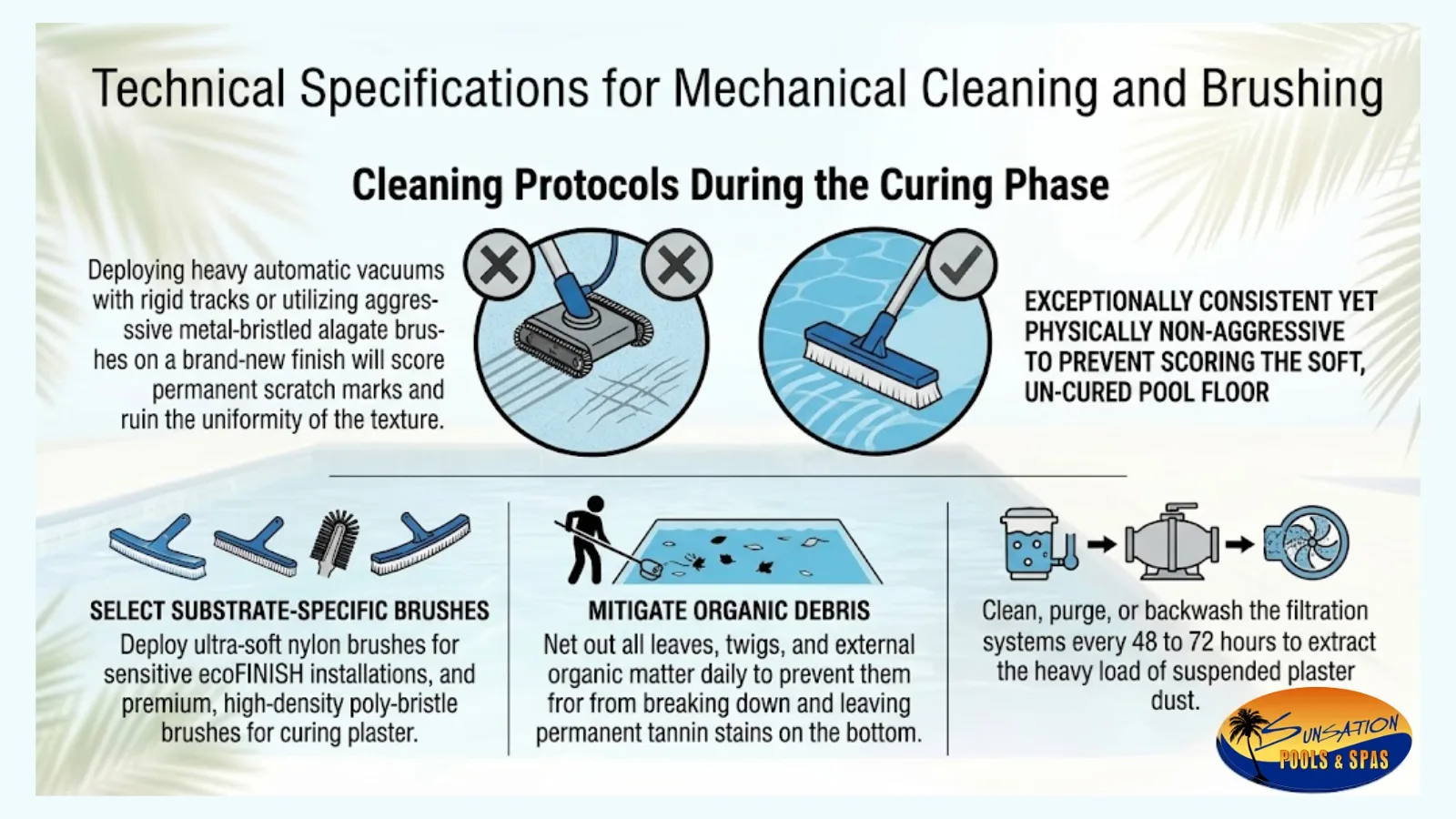
Cleaning protocols during the curing phase must be exceptionally consistent yet physically non-aggressive to prevent scoring the soft, un-cured pool floor. Deploying heavy automatic vacuums with rigid tracks or utilizing aggressive metal-bristled algae brushes on a brand-new finish will score permanent scratch marks and ruin the uniformity of the texture.
The Professional Maintenance Protocol
- Select Substrate-Specific Brushes: Deploy ultra-soft nylon brushes for sensitive ecoFINISH installations, and premium, high-density poly-bristle brushes for curing plaster.
- Mitigate Organic Debris: Net out all leaves, twigs, and external organic matter daily to prevent them from breaking down and leaving permanent tannin stains on the bottom.
- Execute Rigorous Filter Management: Clean, purge, or backwash the filtration systems every 48 to 72 hours to extract the heavy load of suspended plaster dust.
(727)-510-7070 or (727) 559-7180
Mechanical filtration and circulation systems must operate continuously for the first 14 days without a single operational interruption. Freshly resurfaced cementitious basins shed massive quantities of micro-fine calcium particles. If the circulation pumps are deactivated, that suspended dust precipitates directly back onto the floor, hardens under hydraulic pressure, and creates an abrasive, sandpaper-like texture that requires an expensive acid wash to remediate. Establishing disciplined cleaning habits is the single most cost-effective method to protect your asset.
Long-Term Operational Strategies for Lifespan Expansion
Extending the operational lifespan of a pool relies on unchanging operational consistency rather than reactive, heavy-handed chemical corrections. Once the initial 30-day curing window closes, the facility transitions into standard operational care, where preventing sharp environmental spikes becomes the primary objective.
Critical Long-Term Operational Tasks
- Perform Bi-Weekly Digital Balancing: Run full-spectrum digital water analyses twice per week to intercept chemical fluctuations driven by shifting bather loads.
- Enforce Preventative Brushing Schedules: Maintain a strict protocol of brushing the entire vertical and horizontal substrate twice weekly to disrupt biofilm formation.
- Execute Post-Storm Mitigation Protocols: Re-balance chemical parameters immediately following heavy tropical downpours or sudden afternoon thunderstorms.
Commercial aquatic facilities in Largo, Florida, operate under constant environmental stress, including extreme humidity, intense UV radiation, and heavy rainfall events that can destabilize water chemistry within hours. Staying ahead of these weekly variables eliminates the risk of sudden plaster erosion, removes the need for harsh chemical shock treatments, and keeps the resurfaced finish looking pristine.
Cultivating a Partnership with Local Commercial Specialists
Partnering with a dedicated commercial specialist insulates property managers from committing catastrophic maintenance errors. Overseeing a commercial property requires balancing heavy bather tracking, strict Department of Health compliance, and highly expensive structural assets simultaneously.
Sunsation Pools & Spas, Inc. delivers elite technical support for commercial property managers who require professional assistance with chemical startup tracking, advanced structural inspections, and long-term finish preservation. Their extensive field experience across both cutting-edge polymer coatings and traditional finishes ensures they can design highly customized care schedules tailored to your facility’s exact footprint, usage metrics, and the micro-climate patterns unique to the Largo region.
Technical Summary of Post-Resurfacing Management
Maximizing the operational lifespan of a newly finished commercial aquatic basin requires daily operational discipline, precise chemical adjustments, and exact tool utilization. From the very first brush stroke to long-term saturation index monitoring, every decision made during the initial phases directly safeguards your capital improvement project.
Adhering to a highly structured start-up program halts early finish degradation, maintains a flawless aesthetic environment, and significantly reduces long-term structural liabilities. Property owners across Largo, Florida, can maximize their return on investment by coordinating directly with Sunsation Pools & Spas, Inc. to ensure their new pool surface remains durable, clean, and structurally sound for decades to come.
Executive and Property Manager Insights
Pro Tip: The Structural Threat of Automatic Systems
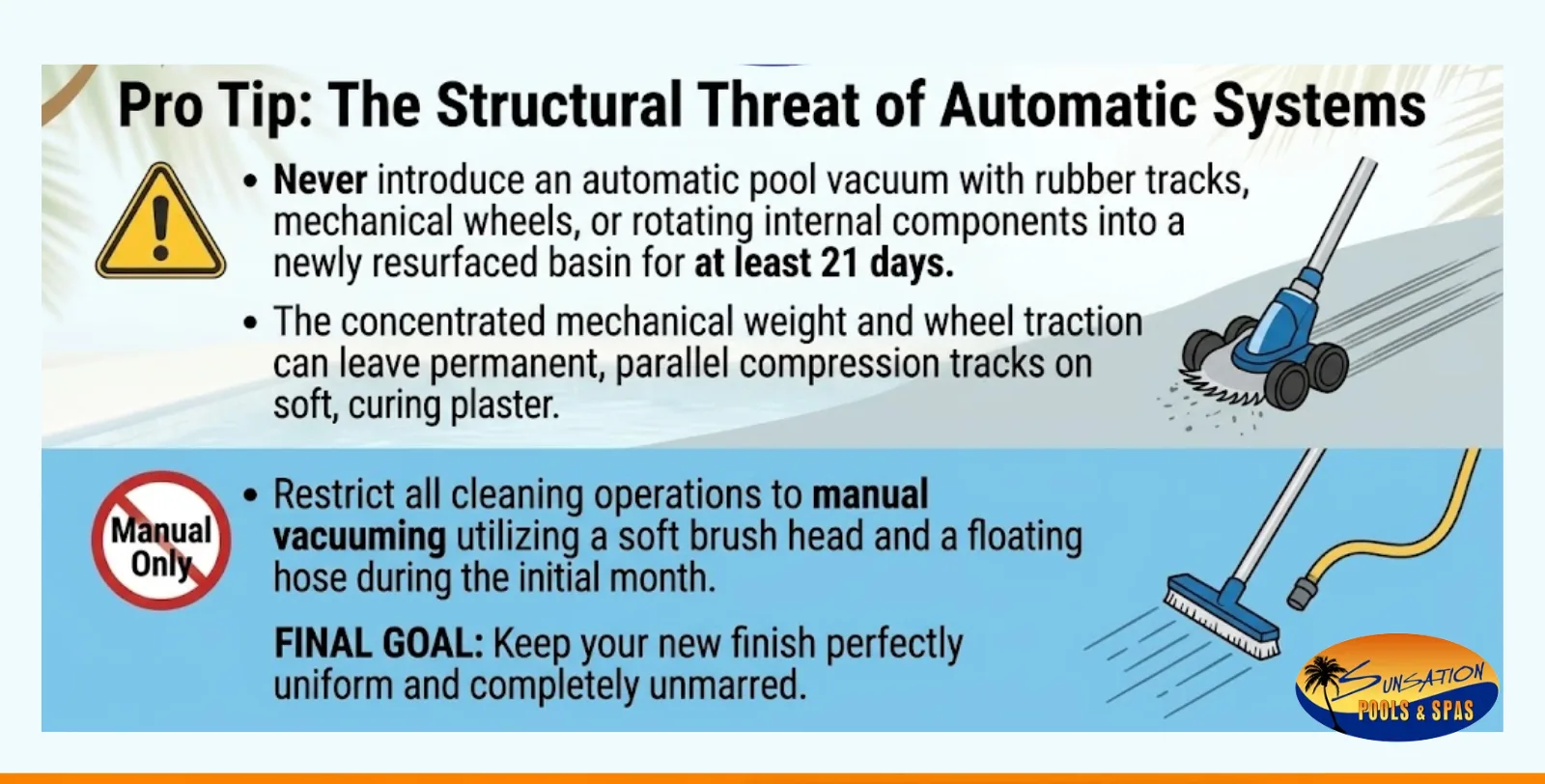
A critical detail that many commercial pool operators overlook is that you must never introduce an automatic pool vacuum with rubber tracks, mechanical wheels, or rotating internal components into a newly resurfaced basin for at least 21 days. The concentrated mechanical weight and wheel traction can leave permanent, parallel compression tracks on soft, curing plaster. Restrict all cleaning operations to manual vacuuming utilizing a soft brush head and a floating hose during the initial month to keep your new finish perfectly uniform and completely unmarred.
(727)-510-7070 or (727) 559-7180
Protecting Your Commercial Aquatic Infrastructure
Securing your structural asset requires immediate, calculated action. To ensure a long-lasting, flawlessly cured finish engineered to withstand the heaviest commercial bather demands, contact Sunsation Pools & Spas, Inc. at (727) 510-7070 today to schedule your specialized post-fill water stabilization audit and establish a bulletproof care plan for your latest commercial pool resurfacing investment. Visit our website and contact us today!
Frequently Asked Questions
Q: How soon can swimmers use the pool after a resurfacing project?
A: Operational readiness depends entirely on the material composition of the finish. High-performance polymer coatings like ecoFINISH can typically accept water and active swimmers within a matter of days. Conversely, traditional cementitious plaster requires a full 28-day hydration and curing cycle before heavy commercial bather loads should be permitted in the water.
Q: How often should I test the pool water chemistry after resurfacing?
A: During the critical first month, water chemistry parameters must be tested every 2 to 3 days to capture and neutralize rapid pH increases triggered by the curing substrate. Once the finish achieves chemical stability after the 30-day mark, standard weekly digital testing is sufficient.
Q: What happens if the maintenance team skips brushing a newly resurfaced pool?
A: Skipping daily brushing allows heavy plaster dust to settle back onto the curing finish under hydraulic pressure. This results in rough calcium scaling, permanent gray discolorations, and an uneven, highly abrasive texture across the entire floor of the basin.
Q: Does water chemistry balance really affect the pool surface that much?
A: Absolutely. Water chemistry balance directly dictates the ultimate lifespan of the finish. Corrosive water characterized by low calcium levels will rapidly etch plaster matrices, while elevated pH levels trigger immediate, unsightly scale accumulation, shortening the surface’s usable life by up to 50%.
Q: Can I use the exact same maintenance routine for all types of pool finishes?
A: No, distinct finishes require completely different care strategies. Traditional marcite plaster demands aggressive, high-frequency brushing and strict calcium saturation monitoring. Advanced polymer finishes like ecoFINISH require less aggressive mechanical brushing but benefit significantly from specialized organic stain prevention protocols.
Q: When should I call a commercial pool professional for an inspection?
A: You should engage a professional immediately if you observe persistent water turbidity, unexplained scale crystallization, or highly volatile chemical readings that refuse to stabilize within the first two weeks following the initial water refill.