


(727)-510-7070 or (727) 559-7180
Finding the ideal swimming climate requires balancing real-world thermal comfort against monthly utility bills. At Sunsation Pools & Spas, we recommend setting your thermostat between 78°F and 82°F for most backyard swimming configurations, as this strikes the perfect sweet spot. This baseline preserves your water treatment chemicals while keeping the water inviting. Dialing in the precise warmth protects your long-term setup investment.
Key Takeaways
- Target a baseline range between 78°F and 82°F for standard backyard swimming.
- Elevate thermal baselines for children and elderly swimmers to preserve metabolic core warmth.
- Deploy physical barriers like thermal blankets to stop evaporative cooling and slash heating bills.
- Enforce rigid chemical balancing parameters to shield heat exchanger surfaces from corrosive pitting.
What Is the Best General Temperature Range for Backyard Pools?
Most residential swimming setups perform best when kept between 78°F and 82°F. This baseline creates a refreshing entry drop without triggering sudden hypothermic gasps or muscle tightening. Keeping your pool water inside these precise parameters avoids systemic chemical overconsumption. It stops accelerated microbial replication before it clouds your plumbing lines.
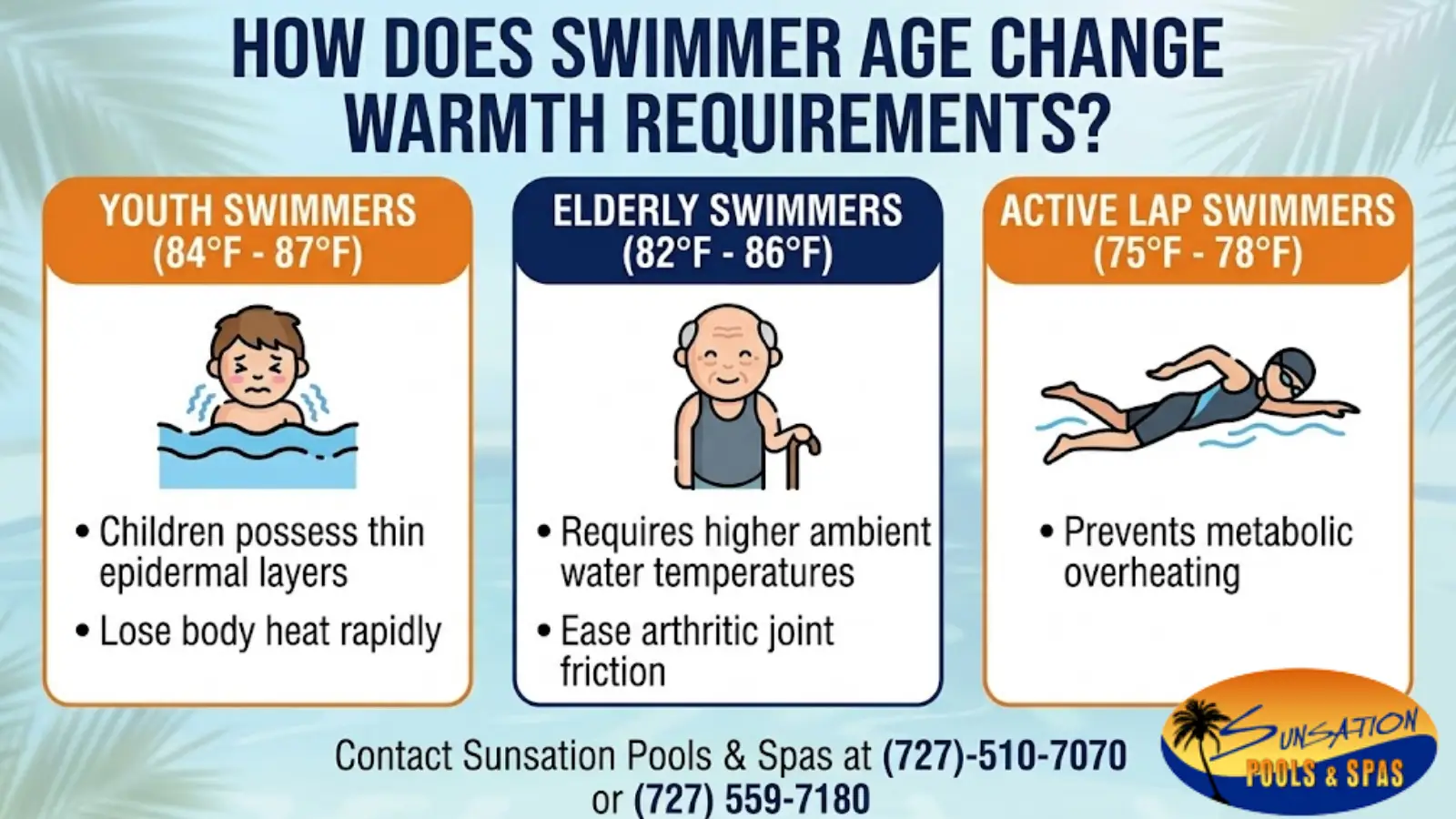
How Does Swimmer Age Change Warmth Requirements?
Different age demographics require specific thermal modifications to maintain core physical health. Children possess thin epidermal layers and lose body heat rapidly during submersion workouts. Seniors require higher ambient water temperatures to ease arthritic joint friction and sustain smooth muscular circulation.
👥 Swimmer Demographic Settings
- 👶 Youth Swimmers (84°F – 87°F): Protects smaller anatomical profiles from rapid chill conditions.
- 🧓 Elderly Swimmers (82°F – 86°F): Eases chronic structural joint stiffness and encourages cardiovascular movement.
- 🏊 Active Lap Swimmers (75°F – 78°F): Prevents metabolic overheating during high-intensity aerobic training sessions.
(727)-510-7070 or (727) 559-7180
How Should You Adjust Pool Warmth Across Different Seasons?
Varying your thermostat setting across changing seasonal weather patterns keeps operational costs manageable. Sweltering summer afternoons allow you to drop mechanical heat inputs safely. Shifting into cooler winter months demands higher thermal baselines to counteract cold ambient air drops.
☀️ Summer Strategy
- Maintain lower settings between 78°F and 80°F to offer a crisp escape from high afternoon humidity.
- Monitor surface conditions closely since intense UV rays accelerate active chlorine degradation.
❄️ Winter Strategy
- Elevate baseline metrics to a range of 82°F to 85°F when crisp northerly winds arrive.
- Run circulation pumps continuously during freezing snaps to prevent fragile pipe ruptures.
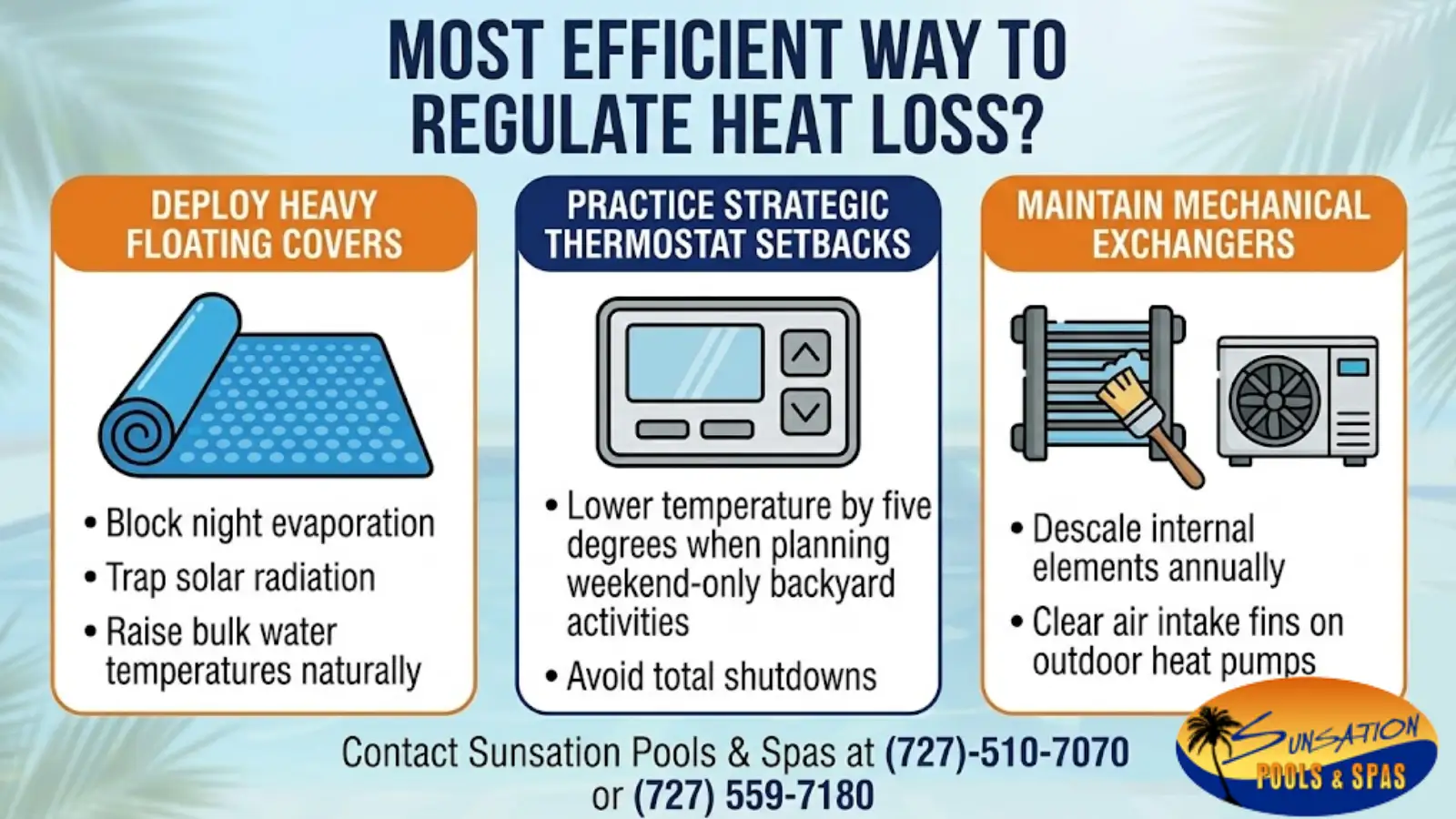
What Is the Most Efficient Way to Regulate Heat Loss?
Managing structural thermal retention requires systematic mechanical interventions. Uncovered water loses massive heat loads directly to the atmosphere through constant nocturnal surface evaporation.
1. Deploy Heavy Floating Covers
- Block night evaporation by rolling out UV-stabilized polyethylene bubble blankets immediately after swimming.
- Trap solar radiation during clear daytime hours to raise bulk water temperatures naturally.
2. Practice Strategic Thermostat Setbacks
- Lower temperature settings by five degrees when planning weekend-only backyard activities.
- Avoid total shutdowns because reheating massive volumes consumes far more energy than maintaining baseline levels.
3. Maintain Mechanical Exchangers
- Descale internal elements annually to remove calcium scale that insulates heat transfers.
- Clear air intake fins on outdoor heat pumps to maximize environmental energy harvesting.
(727)-510-7070 or (727) 559-7180
Traditional Gas Heaters vs. Modern Heat Pumps
| Heating System Technology | Average Operational Cost | Optimal Ambient Climate | Structural Lifespan Expectancy |
| Fossil Fuel Gas Units | High hourly fuel burn rates | Functions perfectly in freezing air | 5 to 8 operational seasons |
| Air-Source Heat Pumps | Low monthly electrical draw | Requires ambient air above 50°F | 10 to 15 operational seasons |
| Solar Collector Arrays | Zero ongoing utility costs | Depends entirely on clear sunshine | 15 to 20 operational seasons |
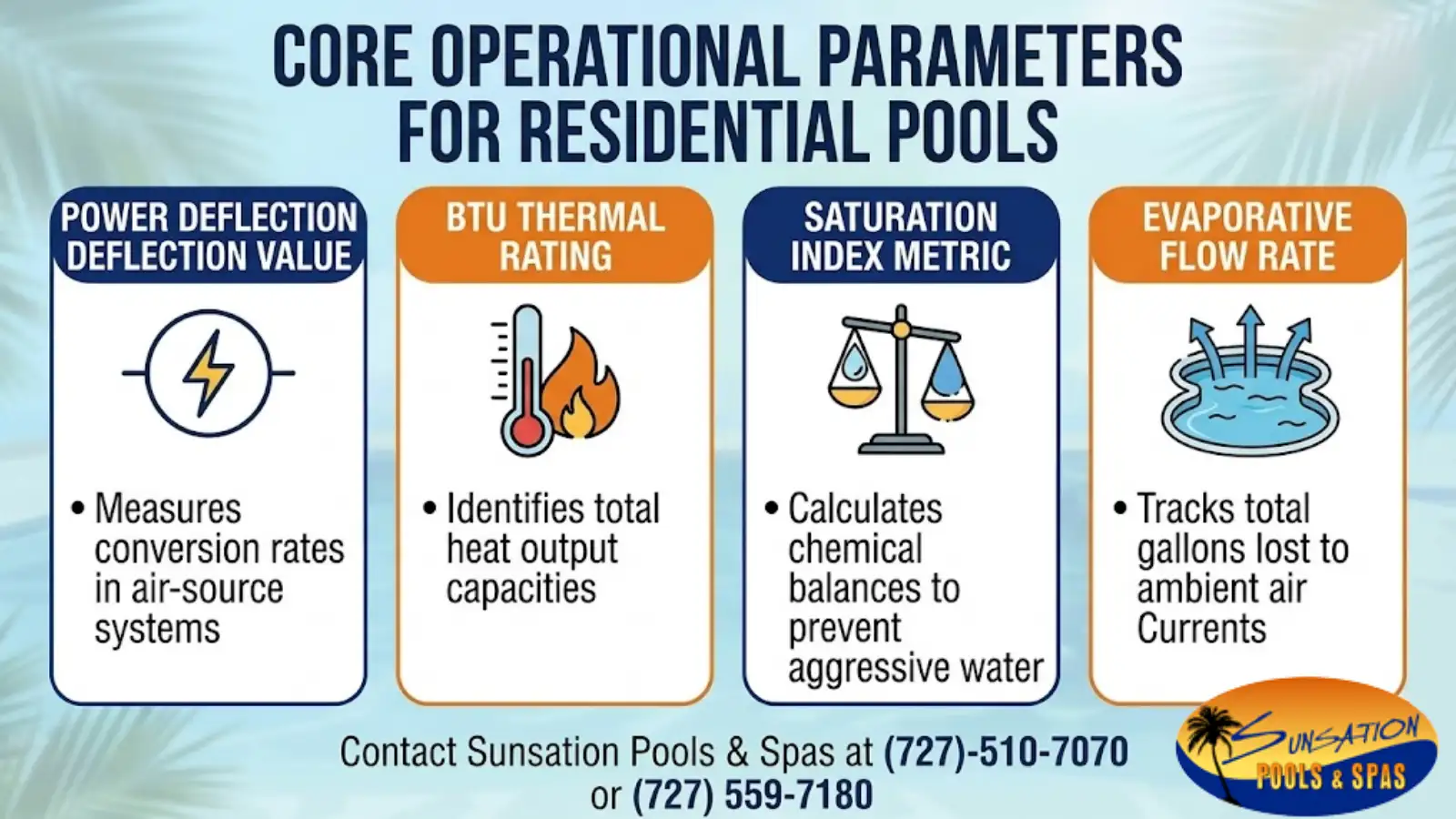
Core Operational Parameters for Residential Pools
- Power Deflection Value: Measures real-time electrical conversion rates inside air-source compressor systems.
- BTU Thermal Rating: Identifies total heat output capacities required to overcome surface cooling.
- Saturation Index Metric: Calculates chemical balances to prevent aggressive water from eating copper heater cores.
- Evaporative Flow Rate: Tracks total gallons lost to ambient air currents each hour.
(727)-510-7070 or (727) 559-7180
Homeowner Insight
Here is the part most backyard pool owners ignore: setting your pool heater to 85°F instead of 82°F can instantly spike your monthly utility bill by up to 30%. High temperatures also turn your pool into an incubator for organic material. Keep your parameters locked below 82°F, invest in a thick thermal blanket, and let physics do the heavy lifting.
Putting Your Pool Temperature Strategy into Motion
Managing your backyard oasis requires balancing mechanical settings with seasonal weather changes. Keeping your pool water calibrated between 78°F and 82°F preserves your chemical base, minimizes structural stress on equipment, and ensures an inviting swim every time. Reach out to Sunsation Pools & Spas, Inc. at (727) 510-7070 to optimize your configuration or update your climate hardware. Visit our website and contact us today!
Frequently Asked Questions
Q: Is 80°F warm enough for a heated pool?
A: Yes, an 80°F setting provides an ideal balance for standard backyard recreational use. This baseline temperature feels refreshing without causing muscle chills or driving up your monthly utility bill.
Q: Does a pool cover really help retain heat?
A: Yes, deploying a heavy physical cover stops up to 70% of total pool heat loss. It blocks ambient overnight evaporation, which is the leading cause of temperature drops in residential setups.
Q: What temperature is best for water aerobics?
A: Water aerobics sessions are best conducted in temperatures between 82°F and 86°F. Warmer water conditions relax stiff muscles and support safe cardiovascular movement during low-impact workouts.
Q: Can pool water be too warm?
A: Yes, letting water temperatures climb past 90°F creates an active breeding ground for organic material. Excessive warmth speeds up evaporation rates and consumes protective sanitation chemicals rapidly.
Q: How often should pool heater systems be inspected?
A: You should schedule professional mechanical inspections at least once every twelve months. Annual cleanings remove internal scaling, verify safe electrical draws, and keep your heating system working efficiently.
