

(727)-510-7070 or (727) 559-7180
What Causes Low Water Pressure? Common Causes
What causes low water pressure? In a swimming pool, low water pressure or weak water flow is often related to a problem on the suction side of the circulation system. A low water level, clogged skimmer or pump basket, blocked plumbing, air entering the system, or an issue with the pump or impeller can all reduce circulation. For homeowners in Largo, Florida, finding the cause early can help prevent a small equipment problem from affecting water quality or leading to more extensive repairs.
At Sunsation Pools & Spas, Inc., pool equipment repairs are part of a broader range of residential and commercial pool services. The company provides equipment repair for pumps, filters, skimmers, and related pool equipment, along with leak detection, resurfacing, remodeling, construction, decking and hardscape work, automation, heating, and cooling services throughout Clearwater, Largo, St. Petersburg, and the surrounding Pinellas County communities.
Key Takeaways
- Low pool water pressure usually points to a circulation or water-flow problem.
- A low water level or clogged skimmer and pump basket can restrict the water entering the pump.
- Air leaks, blocked plumbing, and impeller problems can also reduce circulation.
- High filter pressure can point to a restriction on the return side of the system and should not be treated the same as low pressure.
- Checking simple causes first can help identify whether professional pool equipment service is needed.
- Sunsation Pools & Spas, Inc. provides pool equipment repair and other pool services in Largo and surrounding Pinellas County communities.
Why Does Pool Water Pressure Matter?
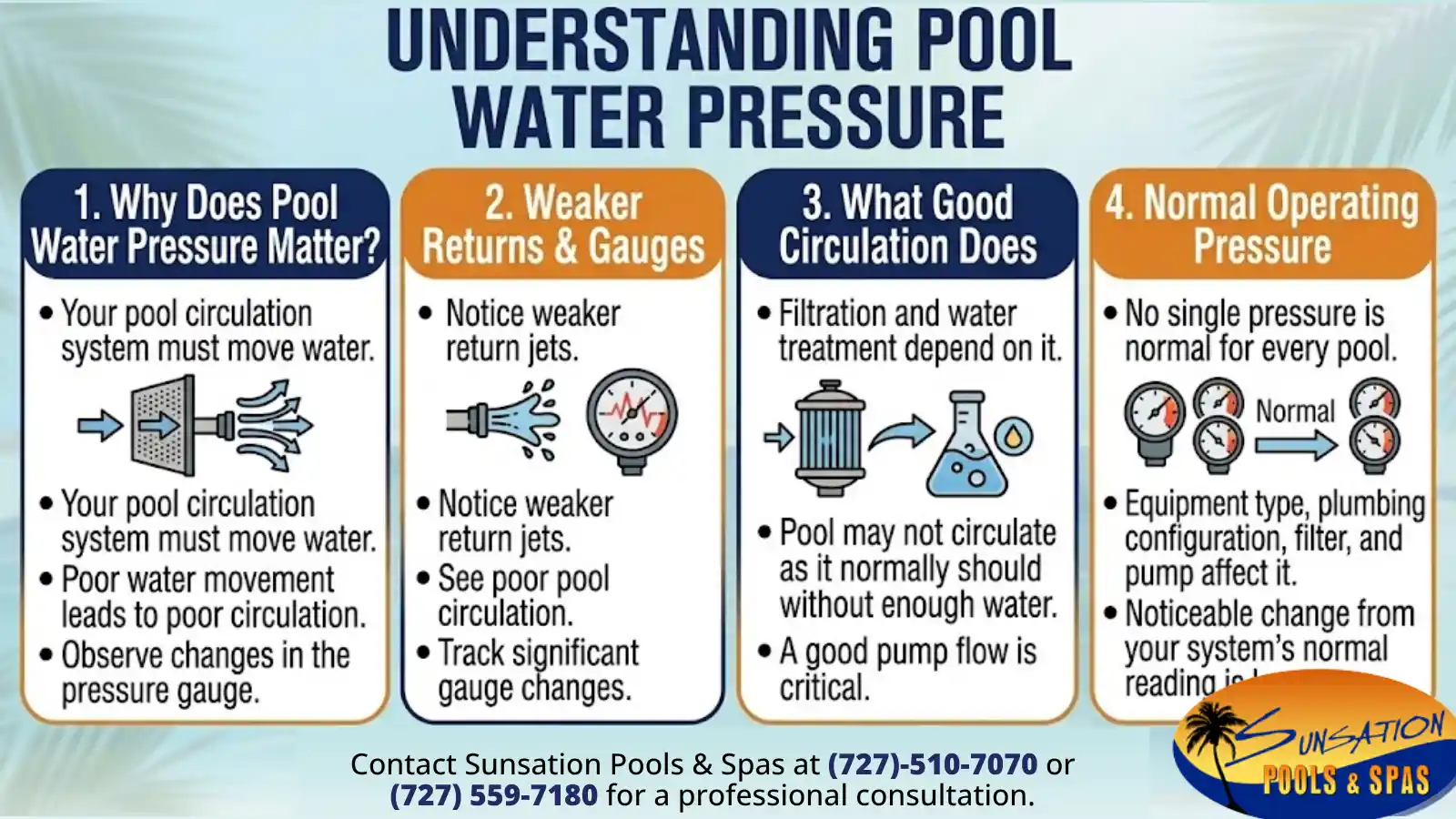
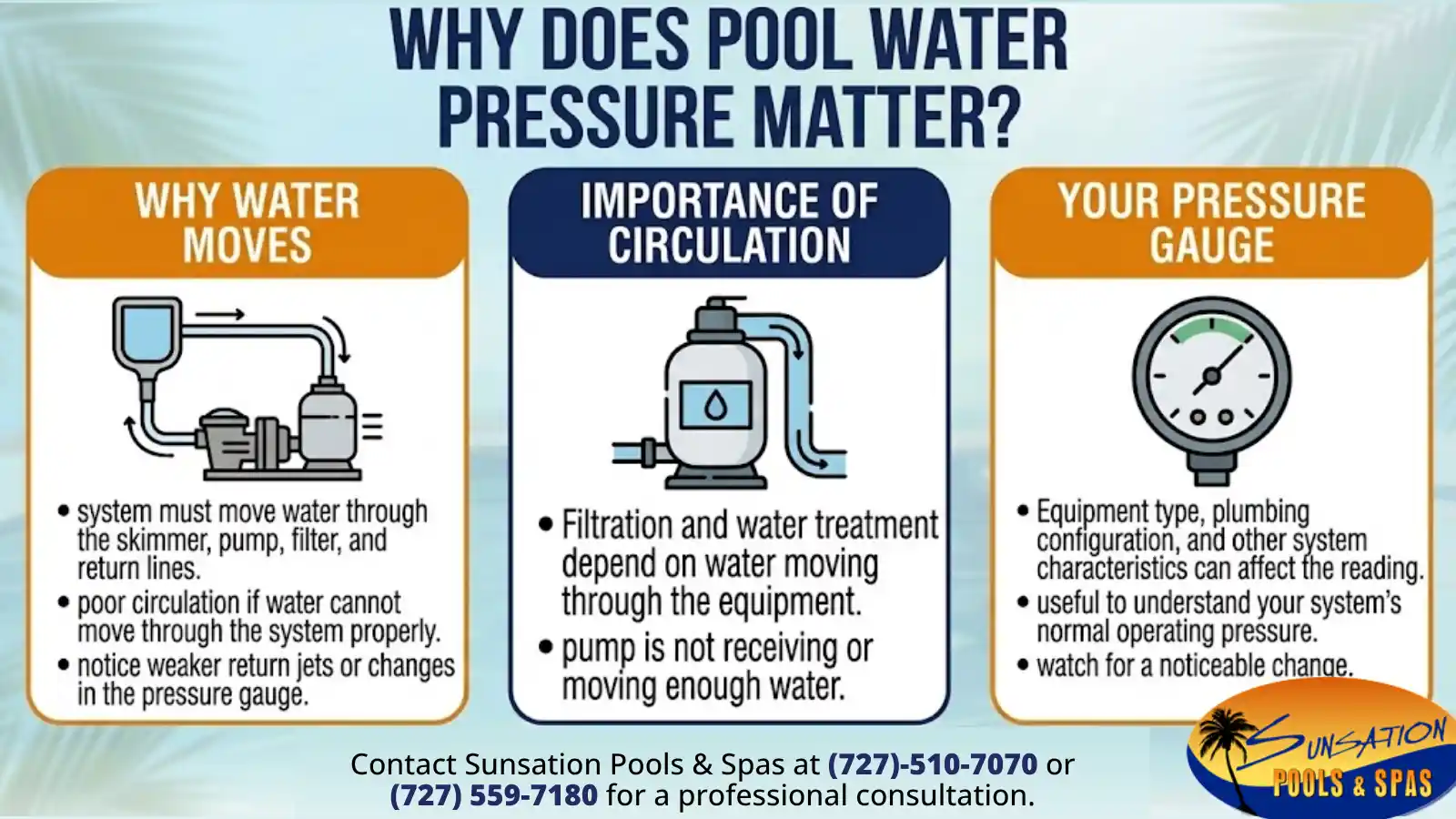
Your pool circulation system must move water through the skimmer, pump, filter, and return lines. When water cannot move through the system properly, you may notice weaker return jets, poor circulation, or changes in the pressure gauge.
Good circulation is important because filtration and water treatment depend on water moving through the equipment. If the pump is not receiving or moving enough water, the pool may not circulate as it normally should.
The pressure gauge is useful, but there is no single pressure reading that is considered normal for every pool. Equipment type, plumbing configuration, filter, pump, and other system characteristics can affect the reading. For that reason, it is more useful to understand your system’s normal operating pressure and watch for a noticeable change.
(727)-510-7070 or (727) 559-7180
Common Causes Of Low Pool Water Pressure
Low Water Level
Start with the simplest possibility: check the pool water level.
If the water level becomes too low, the skimmer may not be able to supply the pump with enough water. This can reduce circulation and may allow air to enter the system.
The appropriate water level depends on the pool and skimmer setup, so avoid relying on a single measurement for every swimming pool. If the water level has dropped noticeably, restore it to the level recommended for your pool system and observe whether circulation improves.
If the water level keeps falling without an obvious reason, a leak may need to be investigated.
A Clogged Skimmer Basket
Leaves, grass, insects, and other debris can collect in the skimmer basket. When enough material accumulates, it can restrict the amount of water reaching the pump.
Turn off the pool equipment before opening or cleaning the basket. Remove the debris and check whether normal circulation returns after the system is restarted.
Regularly checking the skimmer basket is a simple maintenance step, particularly after storms or periods when your pool collects a lot of debris.
A Dirty Pump Basket
The pump basket catches debris before it can travel farther into the circulation system. If the basket becomes packed with leaves or other material, water flow can be restricted.
Always turn off the pump before opening the pump basket. Clean the basket carefully and make sure it is seated correctly when you put it back.
If the basket becomes clogged repeatedly despite routine cleaning, there may be another issue contributing to the problem.
A Blocked Impeller
The impeller is an important part of the pump because it helps move water through the circulation system. Debris that gets past the pump basket can interfere with the impeller.
A damaged or obstructed impeller can result in poor water movement. Because accessing pump components can involve electrical equipment and moving parts, homeowners should use caution rather than taking apart equipment they are not comfortable servicing.
If cleaning the baskets does not restore circulation, professional equipment inspection can help determine whether the pump or impeller is contributing to the problem.
Air Entering The System
Air can affect circulation when it enters a part of the system that should remain filled with water.
Possible areas to inspect include pump connections, fittings, valves, and the pump lid and its seal. Depending on the equipment and plumbing configuration, air entering the suction side can cause weak circulation and may be visible as air bubbles in the pump housing or at the returns.
Persistent air in the system is worth investigating instead of repeatedly restarting the pump. An equipment professional can check the circulation system for a source of air intrusion.
A Plumbing Restriction
Pool plumbing can become restricted by debris or other problems. A restriction on the suction side can limit the amount of water reaching the pump, while restrictions elsewhere in the system can affect circulation and pressure readings.
Because pool plumbing is not always accessible for a homeowner to inspect visually, persistent low flow may require professional troubleshooting.
(727)-510-7070 or (727) 559-7180
What Is The Difference Between Low And High Pool Pressure?
Low and high pressure do not necessarily have the same cause.
Low pressure or weak flow can indicate that the pump is not receiving enough water or that water is being restricted before or around the pump. Possible causes include a low water level, clogged baskets, air entering the suction side, or an impeller problem.
High pressure can indicate a restriction after the pump, such as a dirty filter or another issue affecting the return side of the circulation system.
This distinction matters because cleaning a filter may help when pressure is high, but it will not necessarily solve a low-pressure problem caused by a clogged skimmer or restricted suction line.
If you are unsure what your pressure reading means, compare it with your pool’s normal operating reading and have the system inspected when the change persists.
How To Check For A Low-Pressure Problem
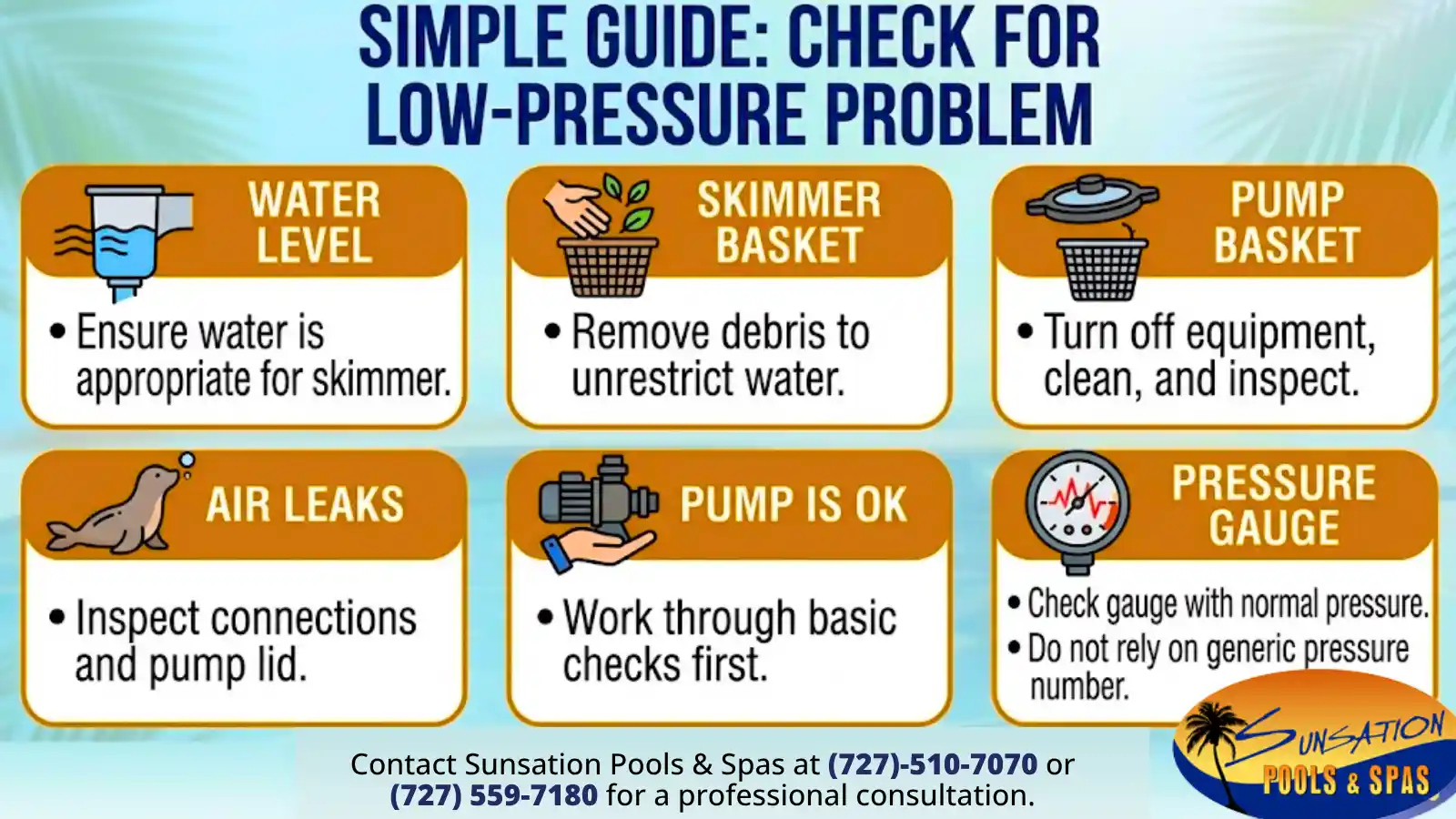
Before assuming that the pump needs to be replaced, work through the basic checks.
Check The Pool Water Level
Make sure the water level is appropriate for your skimmer and circulation system. A low level can prevent the pump from receiving a consistent supply of water.
Clean The Skimmer Basket
Remove leaves and debris that could restrict water entering the circulation system.
Clean The Pump Basket
Turn off the equipment and clean the pump basket. Inspect it for damage before returning it to its proper position.
Look For Obvious Air Leaks
If you notice persistent air bubbles or other signs that air is entering the system, inspect accessible connections and the pump lid and seal. A recurring problem may require professional diagnosis.
Check The Filter And Pressure Gauge
Look at the pressure gauge and compare the reading with the normal operating pressure for your equipment. A significant change can provide a useful clue about the circulation system.
Do not rely on a generic pressure number as the only way to determine whether your pool is operating correctly. The manufacturer’s specifications and your pool’s established operating conditions are more useful references.
(727)-510-7070 or (727) 559-7180
When Should You Call A Pool Professional?
Some pool circulation problems are easy to identify, while others require equipment knowledge and diagnostic work.
Consider professional service if:
- The pump continues to show poor circulation after basic cleaning.
- The pressure reading changes significantly and does not return to normal.
- Air continues entering the circulation system.
- The pump makes unusual sounds.
- The pump repeatedly loses prime.
- You suspect a blocked or damaged impeller.
- You cannot identify the source of the problem.
- The pool is not circulating or filtering water properly.
Trying to force a pump to operate when it has a circulation problem can make troubleshooting more difficult and may place unnecessary strain on the equipment.
For homeowners in Largo, Sunsation Pools & Spas, Inc. offers pool equipment repair for pumps, filters, skimmers, and other pool equipment. The company also provides leak detection, pool resurfacing, remodeling, construction, decking and hardscape work, and pool automation, heating, and cooling solutions.
Pool Equipment Services In Largo, Florida
Low water pressure is only one sign that a pool’s circulation system may need attention. Sunsation Pools & Spas, Inc. serves Clearwater, Largo, St. Petersburg, and surrounding Pinellas County communities with pool construction, renovation, resurfacing, equipment services, leak detection, and other pool solutions. Its website identifies the business as a Florida State Certified Commercial and Residential Pool Contractor and lists more than 17 years of experience in the pool construction and remodeling industry.
The company’s equipment services include work involving pumps, filters, heaters, salt chlorination systems, lighting, and other pool equipment. This allows homeowners to address equipment concerns as part of a larger pool maintenance, renovation, or upgrade project when appropriate.
If your pool is showing weak circulation and you are still wondering What causes low water pressure?, the cause may be as simple as a clogged basket or as involved as a plumbing or equipment issue. Start with the basic checks, but have the system evaluated when the problem persists.
For pool equipment repair and other pool services in the Largo area, contact Sunsation Pools & Spas, Inc. at (727) 510-7070 to schedule a free consultation and discuss your pool’s symptoms and service needs. Visit our website and contact us today!
Frequently Asked Questions
Q: What Causes Low Water Pressure In A Pool?
A: Low pressure can result from a low water level, clogged skimmer or pump baskets, restricted plumbing, air entering the circulation system, or an impeller problem. The specific cause depends on the pool’s equipment and plumbing configuration.
Q: Why Is My Pool Pump Running But Not Moving Enough Water?
A: A pump can run while circulation remains weak if the water supply is restricted or the pump cannot move water properly. Check the water level and baskets first. If the problem continues, the pump, impeller, plumbing, or another component may need inspection.
Q: Can A Dirty Pool Filter Cause Low Pressure?
A: A dirty filter more commonly causes increased pressure on systems where the pressure gauge is located on the filter’s return side. However, pressure readings vary by equipment configuration. A persistent abnormal reading should be evaluated based on the pool’s normal operating pressure.
Q: How Do I Know If My Pool Pump Has An Air Leak?
A: Persistent air bubbles in the pump housing or return jets can be a sign that air is entering the circulation system. Check accessible connections and the pump lid and seal, but persistent air intrusion may require professional troubleshooting.
Q: Should I Replace My Pool Pump If The Pressure Is Low?
A: Not necessarily. Low pressure does not automatically mean the pump needs replacement. Simple problems such as low water, clogged baskets, air entering the system, or a blockage can affect circulation. The cause should be identified before replacing equipment.
Q: Can Low Pool Pressure Affect Water Quality?
A: Yes. Poor circulation can interfere with filtration and the distribution of treated water throughout the pool. If weak circulation continues, the pool may not be maintained as effectively as it should be.
Q: How Often Should Pool Equipment Be Checked?
A: Routine observation and maintenance help identify changes before they become larger equipment problems. Check your pool’s water level, baskets, pressure reading, and general circulation regularly, and follow the maintenance recommendations for your specific equipment.