

(727)-510-7070 or (727) 559-7180
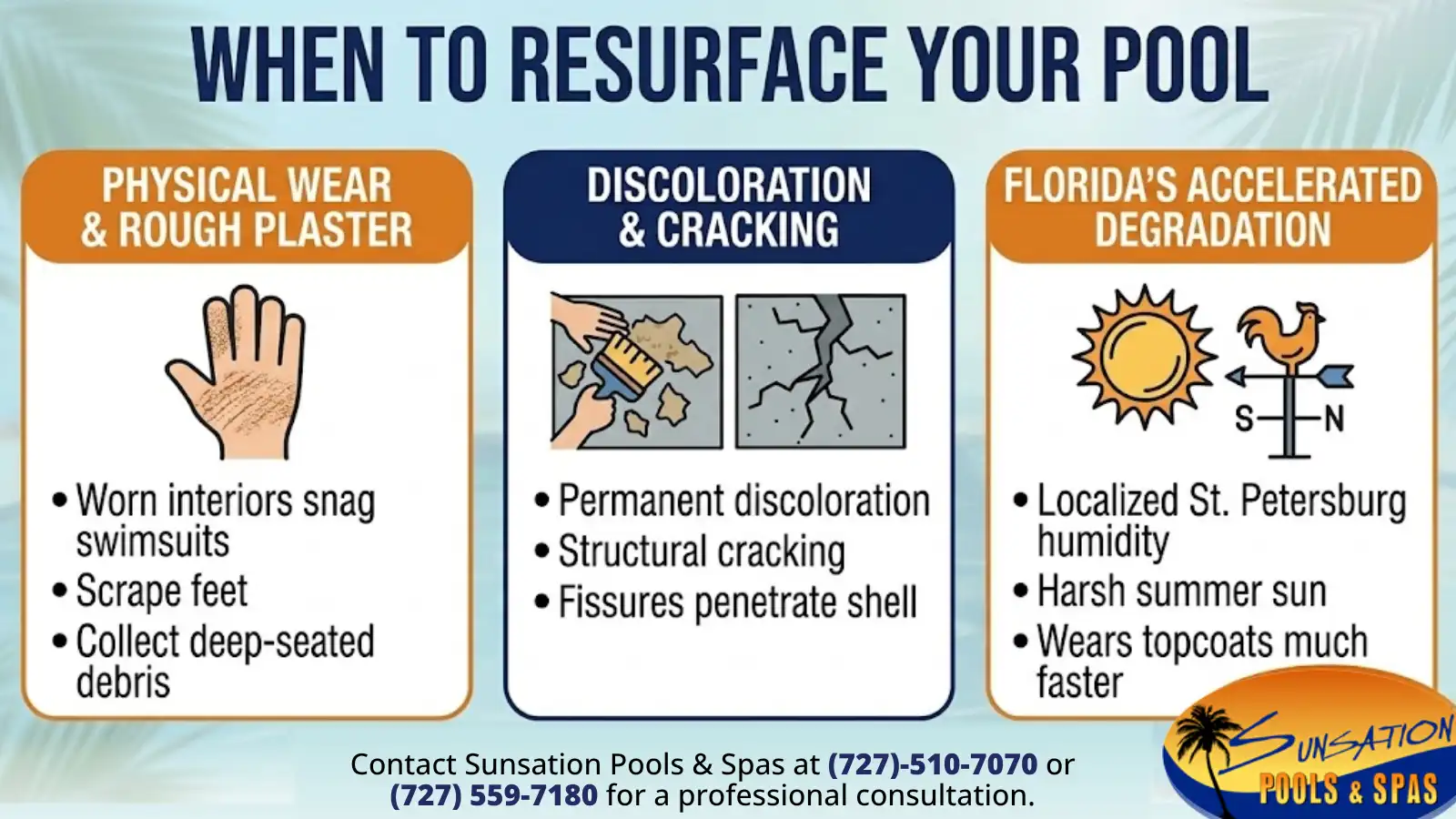
Knowing when to resurface pool interiors comes down to watching for clear signs of physical deterioration, including rough plaster, stubborn chemical staining, fading, and structural checking. For Sunsation Pools & Spas, minor surface issues respond to chemical treatments, but broad degradation requires stripping the worn top layer and applying fresh finish material.
- Rough Texture Check: Feel floor plaster for sharp aggregate exposure.
- Stain Permanence: Distinguish between topical algae and deep plaster etching.
- Structural Safety: Evaluate delamination and bond-failure cracks before coating.
- Chemistry Impact: Stop aggressive water chemistry from destroying new finishes.
How Do You Know When to Resurface Pool Finish Materials?
You know when to resurface pool surfaces when physical wear creates rough plaster, permanent discoloration, or structural cracking. Worn interiors snag swimsuits, scrape feet, and collect deep-seated debris. The localized St. Petersburg humidity and harsh summer sun accelerate this degradation, wearing down topcoats much faster than indoor installations.
(727)-510-7070 or (727) 559-7180
What Causes an Abrasive or Rough Interior?
A sound interior finish feels smooth and soft underfoot. When plaster matrix dissolves from aggressive water chemistry, hard aggregate particles stick out. This rough surface scrapes toes, harbors stubborn black algae spores, and demands significantly more chlorine during hot summer months.
Why Do Persistent Stains Fail to Clean Off?
Topical metal stains or algae blooms wipe away with spot acid washing and proper balance. Deep mineral deposits and dark spots that stay etched into the underlying plaster matrix signal complete finish breakdown. When chemical treatments fail to restore color, the material has reached the end of its functional life.
How Does Fading Impact the Plaster Matrix?
Constant exposure to intense St. Petersburg sunshine breaks down colored quartz and plaster pigments over time. Uneven bleaching or splotchy discoloration shows that protective top layers have eroded. Beyond looking tired, eroded top layers leave raw cement exposed to ongoing chemical saturation.
Are Structural Cracks a Sign of Delamination?
Small spiderweb hairline cracks often indicate normal curing shrinkage, but deep fractures signal serious trouble. Chips, hollow spots, and peeling sections mean the finish has lost its physical bond to the underlying gunite shell. These open voids allow water to migrate beneath the plaster, rusting internal rebar.
Why Is an Old Surface Harder to Maintain?
As interior plaster ages, its surface becomes extremely porous and full of micro-pits. These tiny microscopic pockets trap dirt, organic debris, and green algae spores away from routine brush sweeps. Homeowners end up pouring excessive chemicals into the water while battling persistent dullness.
How Does Wear Cause Swimmer Discomfort?
Rough pool plaster acts like coarse sandpaper on bare feet and knees. Swimmers often complain of scratched skin, snagged swimsuits, or sore toes after brief use. Upgrading to a modern smooth finish restores comfort while making routine maintenance effortless.
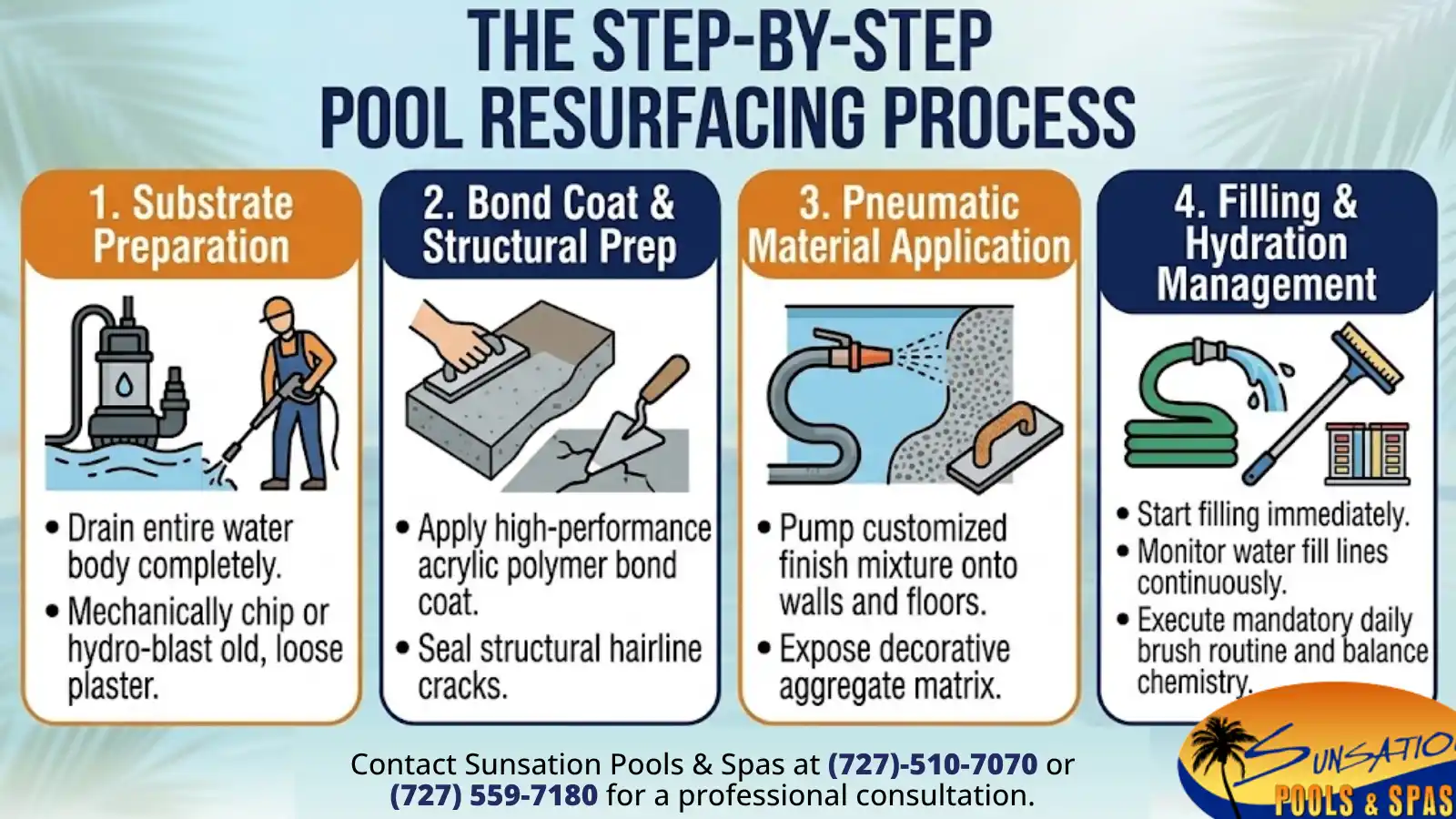
What Is the Step-by-Step Pool Resurfacing Process?
- Substrate Preparation & Hydro-demo
- Drain entire water body completely using continuous submersible trash pumps.
- Undercut all perimeter tile lines, main drains, light niches, and return fittings.
- Mechanically chip or hydro-blast away old, loose, or delaminated plaster layers.
- Bond Coat & Structural Prep
- Apply high-performance acrylic polymer bond coat over exposed bare concrete shells.
- Seal all structural hairline cracks using specialized hydraulic cement compounds.
- Allow bond layer to cure fully to build a permanent hydraulic foundation.
- Pneumatic Material Application
- Pump customized finish mixture directly onto walls and floors using high-pressure hoses.
- Hand-trowel plaster, quartz, or pebble finish smoothly to exact thickness specs.
- Expose decorative aggregate matrix using precise water-rinse washing techniques.
- Filling & Hydration Management
- Start filling immediately after application to control plaster curing speed.
- Monitor water fill lines continuously to prevent permanent bathtub ring marks.
- Execute mandatory daily brush routine and balance chemistry over a 28-day cure cycle.
(727)-510-7070 or (727) 559-7180
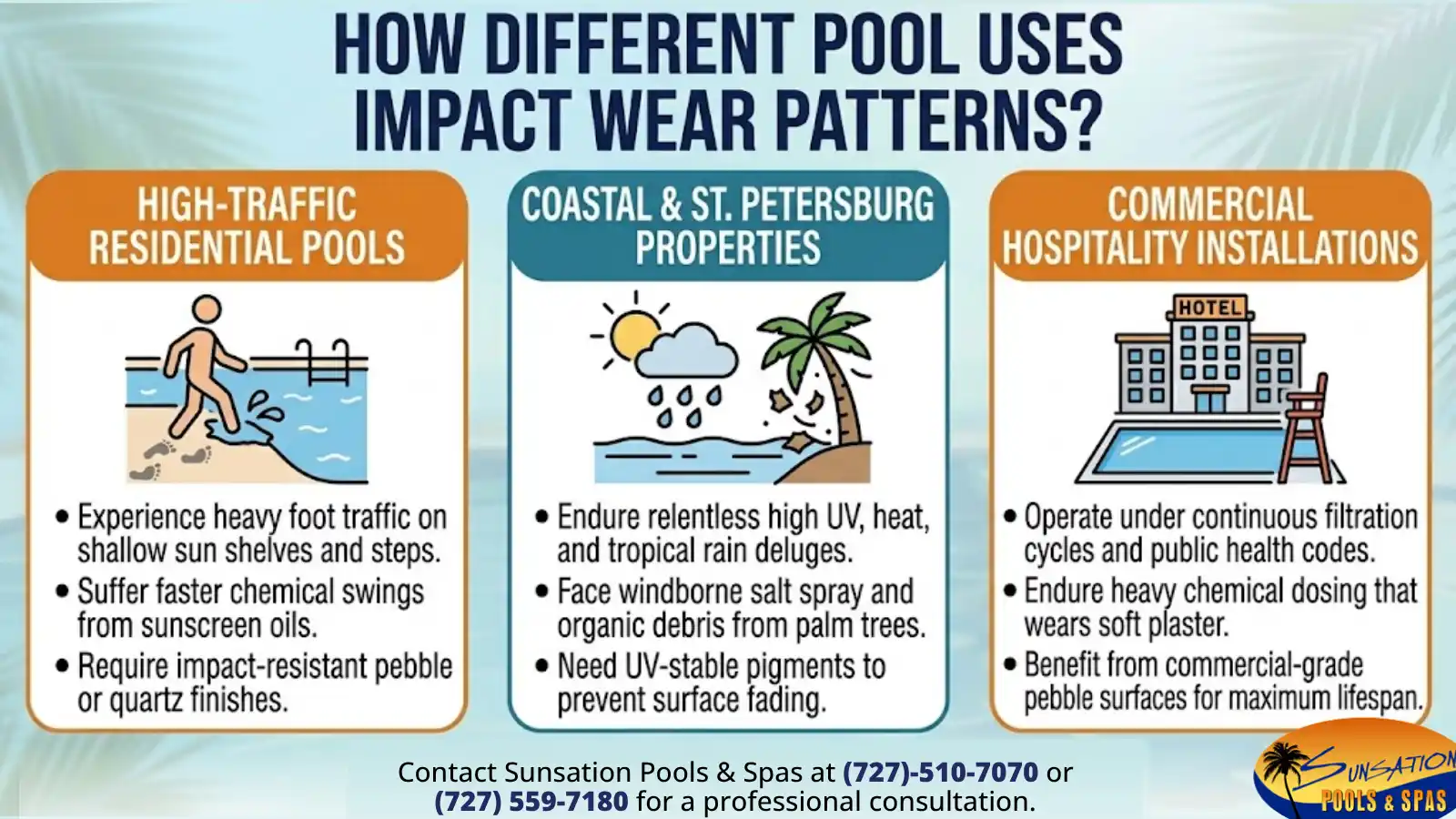
How Do Different Pool Uses Impact Wear Patterns?
🏊 High-Traffic Residential Pools
- Experience heavy foot traffic on shallow sun shelves and steps.
- Suffer faster chemical swings due to high swimmer loads and sunscreen oils.
- Require dense, impact-resistant aggregate finishes like pebble or quartz.
🌴 Coastal & St. Petersburg Properties
- Endure relentless high UV exposure, heat, and tropical rain deluges.
- Face windborne salt spray and organic debris from palm trees.
- Need UV-stable color pigments to prevent premature surface fading.
🏢 Commercial Hospitality Installations
- Operate under strict public health codes and continuous filtration cycles.
- Endure heavy commercial chemical dosing that wears down soft plaster quickly.
- Benefit from commercial-grade pebble surfaces engineered for maximum lifespan.
How Do Common Pool Finishes Compare?
| Finish Type | Average Lifespan | Surface Texture | Chemical Stain Resistance |
| Standard Marcite | 5 – 7 Years | Very Smooth | Moderate (Porous Plaster Base) |
| Modified Quartz | 10 – 12 Years | Smooth to Slightly Textured | High (Hard Silica Additives) |
| Pebble Matrix | 15 – 20+ Years | Textured / River-bed Feel | Exceptional (Natural Stones) |
| Fiberglass Coating | 10 – 15 Years | Ultra-Smooth | High (Non-Porous Barrier) |
Essential Industry Terms Every Homeowner Should Know
- Delamination: The complete physical separation of interior plaster from underlying gunite shells.
- Bond Coat: A specialized polymer-modified cement slurry applied before spraying new plaster finishes.
- Etching: Chemical erosion caused by low pH or acidic water eating concrete plaster matrix.
- Calcium Scaling: White, chalky mineral crusts forming on pool walls from high pH or hard water.
- Laitance: A weak, milky layer of cement paste rising to plaster surfaces during troweling.
Pro Tip for Homeowners
Here is the part most pool guys won’t tell you: Never fill a freshly resurfaced pool using a soft-water system or garden hose without a carbon filter. Tap water in Pinellas County carries fluctuating mineral levels that can permanently stain fresh plaster during the first critical 72 hours of hydration. Always monitor initial fill water chemistry continuously.
(727)-510-7070 or (727) 559-7180
Plan Your Swimming Pool Renovation Today
Choosing the right time to update your pool interior protects your property investment while eliminating constant maintenance headaches. Working with experienced pool professionals guarantees your project is completed using Florida-certified materials built specifically for regional climate challenges.
Sunsation Pools & Spas, Inc. brings over 17 years of hands-on pool construction, repair, and resurfacing expertise to residential and commercial properties across Pinellas County. Contact our team today to schedule an expert on-site evaluation.
Three Steps to Your New Pool Finish:
- Schedule an Assessment: Request an expert site inspection to check your plaster condition.
- Select Your Custom Finish: Choose from durable Marcite, Quartz, Pebble, or Fiberglass surfaces.
- Enjoy Long-Lasting Results: Relax knowing your fresh finish is installed by certified pool specialists.
Ready to discuss when to resurface pool finishes with Pinellas County’s trusted pool specialists? Reach out to Sunsation Pools & Spas, Inc. at (727) 510-7070 today to request your personalized consultation. Visit our website and contact us today!
Frequently Asked Questions
Q: How do I know if my pool needs resurfacing?
A: You know your pool needs resurfacing when you spot widespread plaster roughness, stubborn dark stains, chipping, or fading. An expert on-site inspection confirms whether full replacement or minor surface repair is necessary.
Q: Can pool stains be removed without resurfacing?
A: Yes, surface metal stains or organic algae blooms often clear up with spot acid washing or balanced water chemistry. Stains etched deep into worn plaster matrix require complete interior resurfacing to remove.
Q: Does pool resurfacing fix structural cracks?
A: No, pool resurfacing applies a decorative topcoat and does not repair deep structural concrete fractures. Structural shell cracks must be injected and sealed with hydraulic compounds before applying new finish materials.
Q: What pool finishes does Sunsation Pools & Spas offer?
A: Sunsation Pools & Spas provides durable Marcite, Quartz, Fiberglass, and natural Pebble interior finishes. The best option depends on your design goals, pool usage, and project budget.
Q: How does water chemistry affect a pool finish?
A: Aggressive water chemistry with low pH or unbalanced calcium dissolves cement plaster, creating rough, pitted surfaces. Proper water balance protects new interior finishes and doubles their functional lifespan.