

(727)-510-7070 or (727) 559-7180
Many property owners prioritize pool shapes or features while ignoring the reality of long-term maintenance needs. The finish on your pool structure naturally breaks down over time from chemical exposure and heavy use, eventually requiring professional intervention. Planning ahead for concrete swimming pool resurfacing ensures your backyard oasis stays functional and preserves your total home value without sudden budget surprises.
At Sunsation Pools & Spas, Inc., we guide Pinellas County property owners through the lifecycle of custom concrete construction. The local Clearwater climate demands regular surface updates to fight structural degradation. Knowing these maintenance steps early saves thousands of dollars down the road.
Key Takeaways
- Expect Wear: Concrete structures inherently require updated exterior finishes during standard ownership cycles.
- Manage Salinity: Saltwater systems accelerate chemical breakdown on standard quartz or plaster options.
- Protect Swimmers: Aging pools develop abrasive textures that cause skin scrapes and discomfort.
- Track Upkeep: Shotcrete builds require tighter water chemistry tracking than generic fiberglass alternatives.
- Inspect Early: Routine physical diagnostic checks catch failing bonds before major water loss happens.
What Does the Renewal Process Actually Entail?
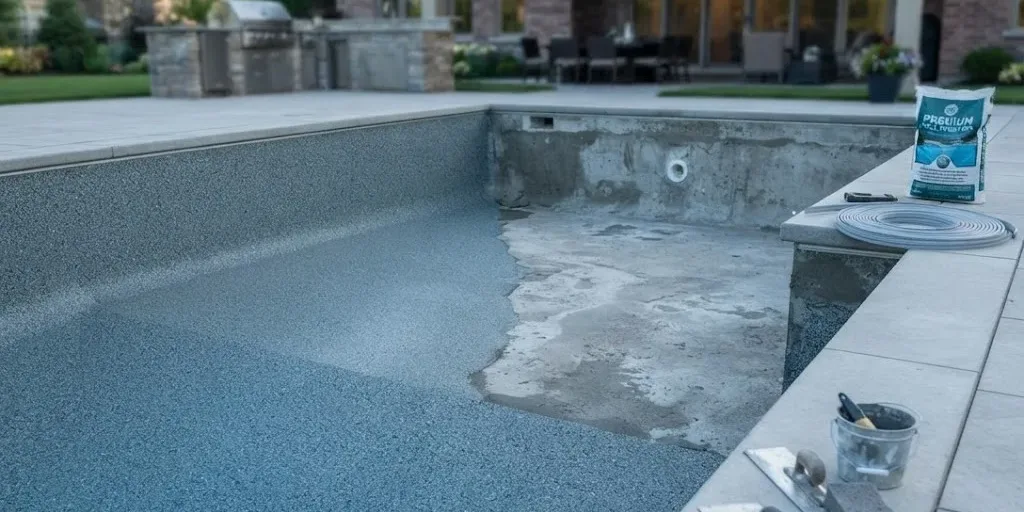
Concrete swimming pool resurfacing strips away compromised, stained plaster down to the original shotcrete shell before shooting a new high-performance aggregat finish. This structural rehabilitation locks out moisture, eliminates embedded black algae colonies, and mirrors original build quality. Skipping this critical update lets water slowly migrate through hairline fractures, rusting internal steel rebar cages and destroying structural integrity.
Why Do Homeowners Overlook Surface Maintenance?
Many buyers mistakenly think a lifetime structural warranty means the interior pool plaster lasts forever without degradation. The structural shell remains intact, but the thin plaster skim coat is a wear surface designed to sacrifice itself over a decade of chemical contact. Reviewing the fine print on manufacturer plaster warranties clarifies exactly when out-of-pocket restoration expenses hit your maintenance schedule.
How Do Saltwater Systems Impact the Pool Interior?
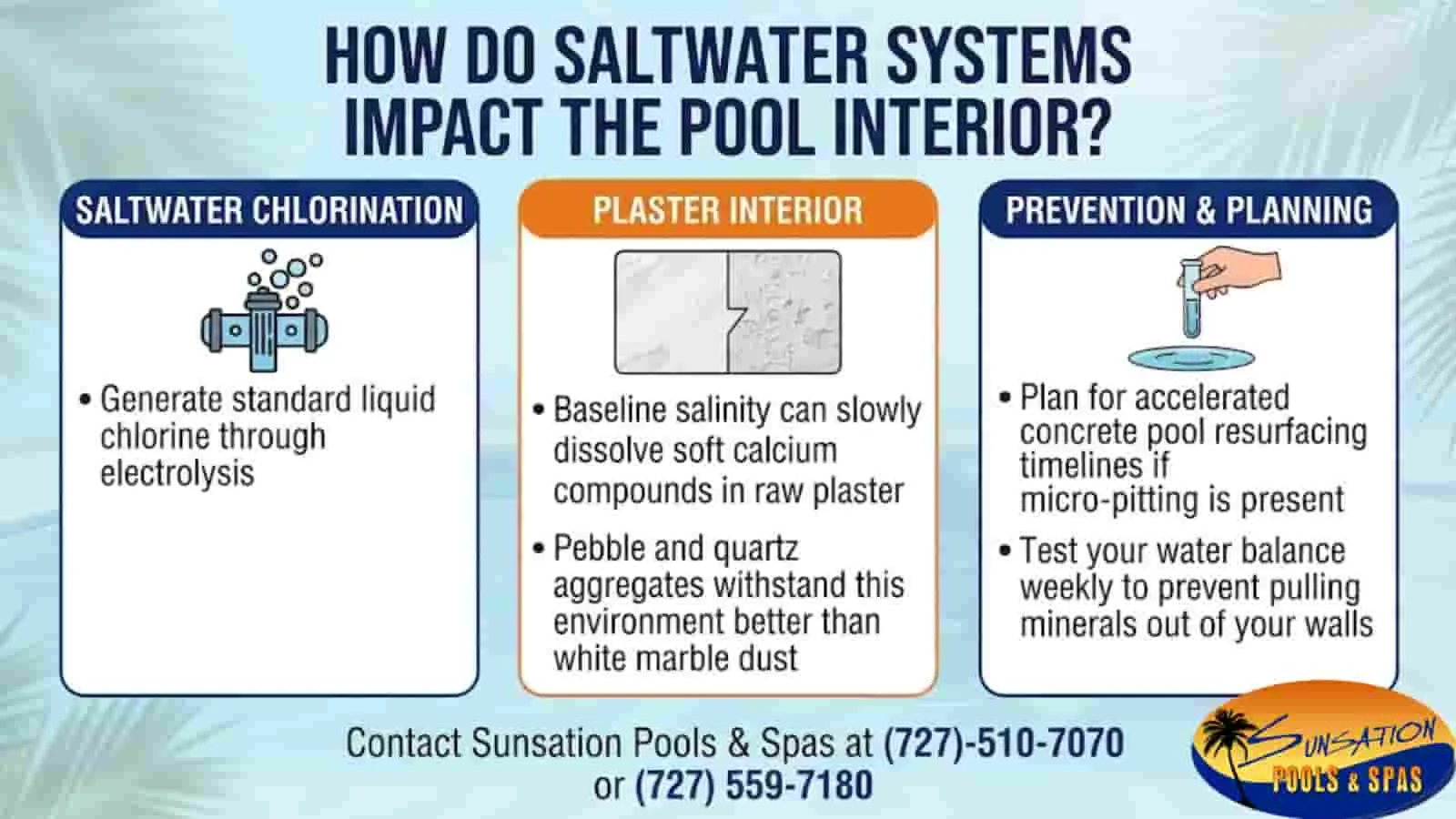
Saltwater chlorination cells generate standard liquid chlorine through electrolysis, but the baseline salinity can slowly dissolve soft calcium compounds in raw plaster. Modern pebble and quartz aggregates withstand this aggressive environment far better than base white marble dust. Clearwater properties converting to salt systems must plan for accelerated concrete swimming pool resurfacing timelines if their current interior finish is already showing signs of micro-pitting. Testing your water balance weekly prevents high salt volumes from pulling essential minerals directly out of your walls.
(727)-510-7070 or (727) 559-7180
Why Do Pool Steps and Floors Get Rough?
Chemical erosion combined with sharp calcium scale buildups turns an originally smooth marcite pool floor into an abrasive sandpaper-like texture. Swimmers notice this raw scraping first on heavy-wear areas like shallow-end entry steps, underwater benches, and spa spillways. Beyond the obvious aesthetic failure, these jagged areas catch organic debris, forming a perfect anchor point for stubborn black algae roots to drill deep into the pool wall. When swimming requires wearing water shoes to avoid cuts, your surface layer has reached its operational limit.
The Strategic Restoration Framework
- Hydro-Demolition Prep: Strip the old, hollow plaster layers completely using specialized pneumatic chipping hammers or high-pressure water blasting equipment.
- Substrate Repair: Patch visible structural cracks with hydraulic cement compounds and seal around all return jets, main drains, and light niches.
- Bond Coat Application: Roll on a specialized water-resistant chemical bonding agent to ensure the new aggregate fuses permanently to the old concrete framework.
- Pneumatic Finish Spray: Shoot the new pebble or quartz aggregate evenly across the pool shell using professional plaster rigs and custom hand-trowel techniques.
- Acid Wash & Water Start: Wash away surface haze to expose the raw stone beauty, then immediately fill the pool to begin the critical curing window.
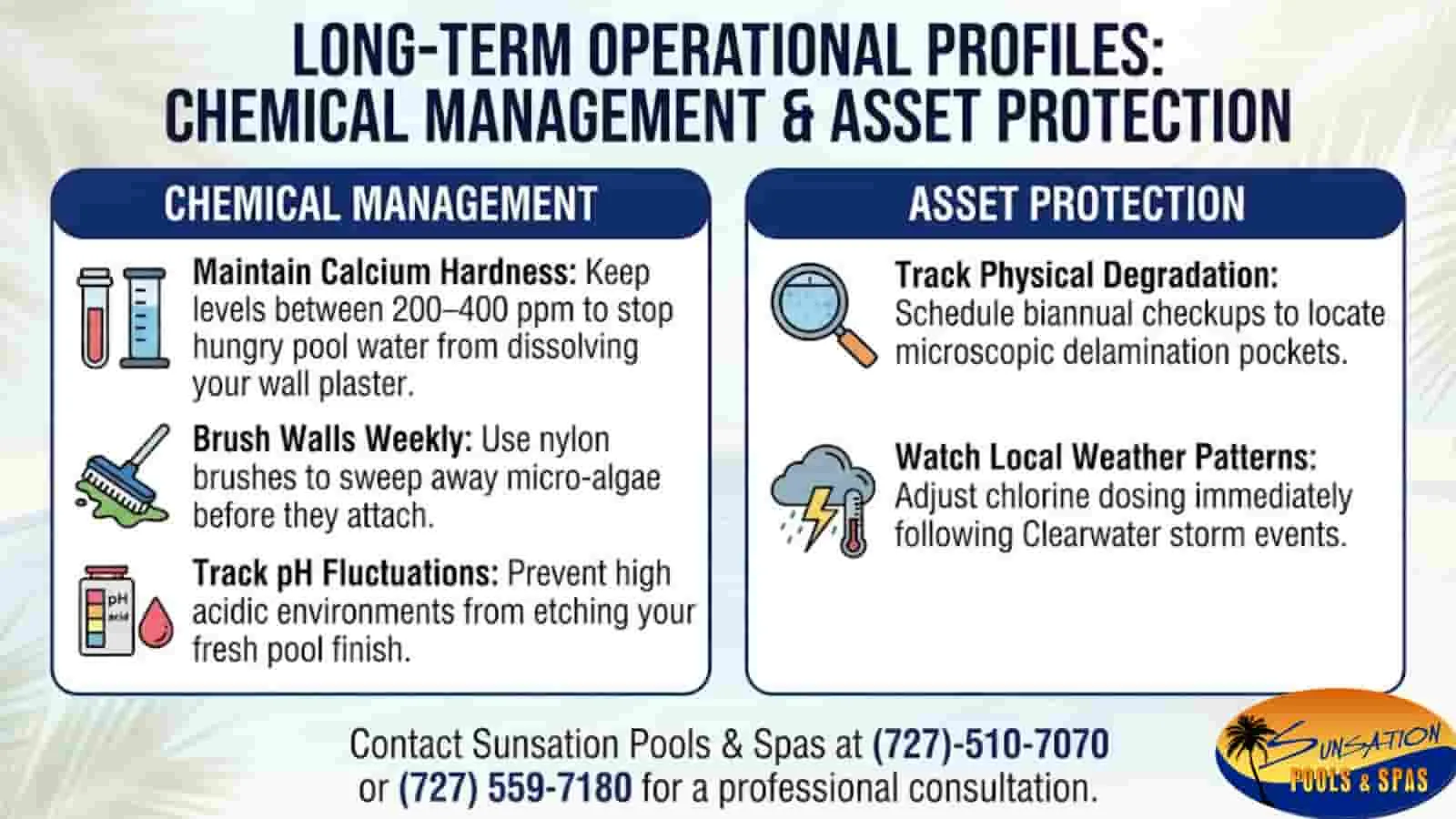
Long-Term Operational Profiles
Chemical Management
- Maintain Calcium Hardness: Keep calcium levels balanced between 200–400 ppm to stop hungry pool water from dissolving your wall plaster.
- Brush Walls Weekly: Use heavy-duty nylon pool brushes to sweep away micro-algae spores before they attach to porous concrete pits.
- Track pH Fluctuations: Prevent high acidic environments from etching deep pathways into your fresh pool finish.
Asset Protection
- Track Physical Degradation: Schedule biannual structural checkups to locate microscopic delamination pockets before they pop loose.
- Watch Local Weather Patterns: Adjust chlorine dosing immediately following heavy Clearwater storm events to prevent chemical shocks from bleaching pool plaster.
(727)-510-7070 or (727) 559-7180
Core Comparison: Performance vs. Standard Finishes
| Finish Attributes | Traditional White Plaster | Premium Pebble Aggregate |
| Average Operational Lifespan | 5 to 8 Years | 15 to 20 Years |
| Stain and Chemical Resistance | Low (Prone to Acid Etching) | High (Resists Scale and Metal Stains) |
| Texture and Grip Underfoot | Smooth (Becomes Rough with Age) | Textured ( slip-resistant and durable) |
| Susceptibility to Salt Systems | Accelerated Pitting | Excellent Resistance |
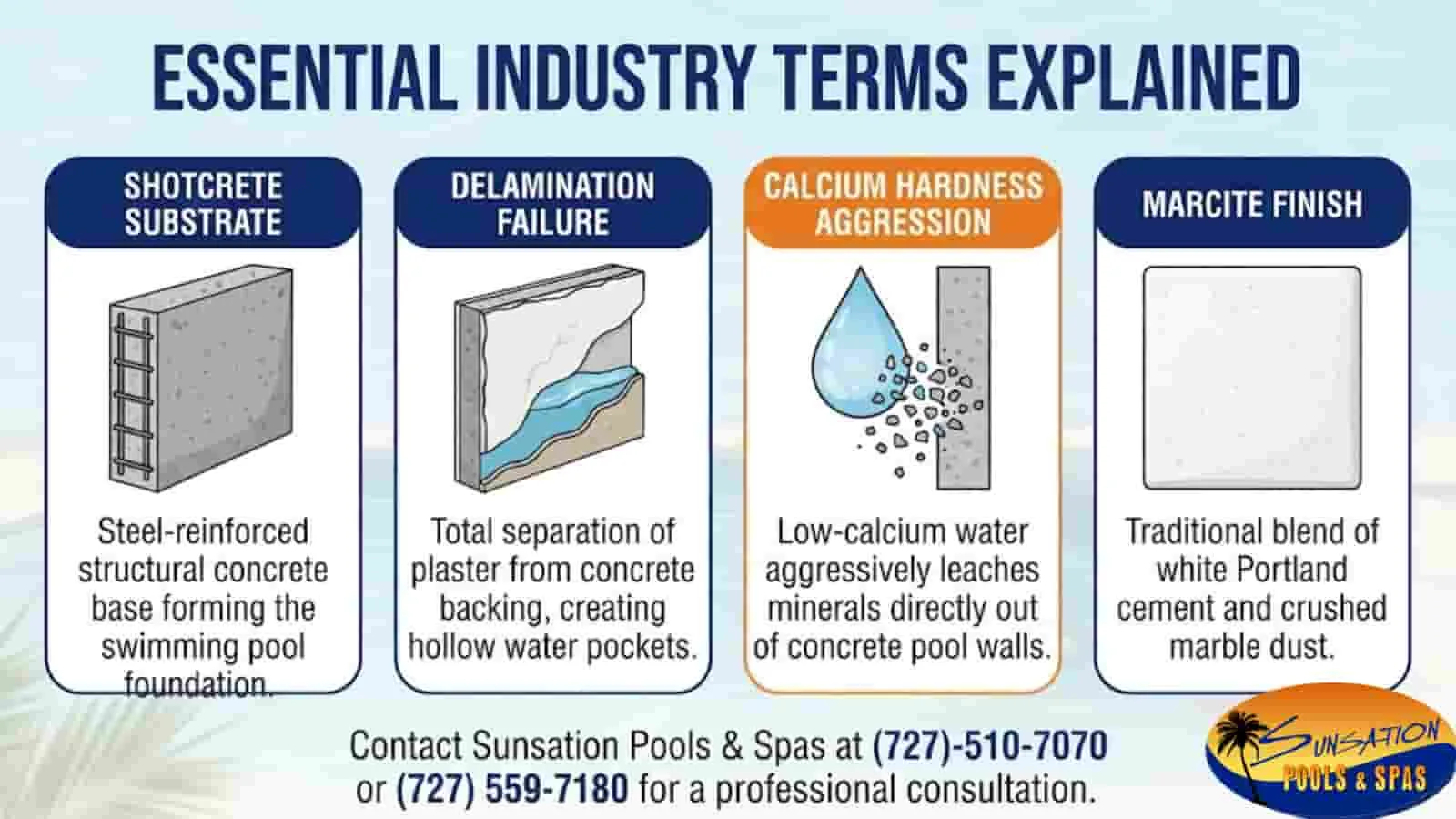
Essential Industry Terms Explained
- Shotcrete Substrate: The thick, steel-reinforced structural concrete base that shapes the swimming pool foundation.
- Delamination Failure: The total separation of the interior plaster finish away from the concrete backing, creating hollow water pockets.
- Calcium Hardness Aggression: A chemical condition where low-calcium water aggressively leaches minerals directly out of concrete pool walls.
- Marcite Finish: A traditional blend of white Portland cement and crushed marble dust used as a entry-level pool coating.
(727)-510-7070 or (727) 559-7180
Homeowner Guide: Spotting Early Plaster Failures
Local Pool Care Advisory: If you notice localized dark discoloration patches that don’t lift after a heavy hand-scrubbing or direct chlorine shock, you are likely looking at exposed raw gunite rather than a simple surface blemish. This means your structural shell is actively drinking pool water. Call in professional pool builders immediately to evaluate the bonding layer before structural ground shifting occurs.
Putting Your Pool Care Strategy into Motion
Maintaining your concrete pool interior preserves your backyard investment and keeps your family swimming safely without chemical burns or scraped feet. Partnering with a licensed local builder ensures your materials stand up to intense Florida heat and shifting water tables. Protect your investment today by scheduling an onsite assessment.
For comprehensive renovations and high-durability finishes across the Tampa Bay region, trust Sunsation Pools & Spas to handle your upcoming concrete swimming pool resurfacing project. Reach out to our experts at Sunsation Pools & Spas! Call (727) 510-7070 to finalize your pool upgrade options. Visit our website and contact us today!
Frequently Asked Questions
Q: How many years do pool finishes typically survive?
A: Most concrete designs require total restoration every 10 to 20 years. This timeline depends highly on the specific pool chemicals used, local water sourcing, and regular physical brushing habits.
Q: Will a salt system ruin my concrete interior?
A: Saltwater does not directly damage structural pool shells, but poor chemical management combined with unbonded stone aggregates causes rapid surface pitting over time.
Q: What are the earliest symptoms of a failing pool interior?
A: Look for constant chemical instability, mysterious water loss, deep surface discoloration, shedding plaster dust, and rough walking areas.
Q: Is re-plastering an older pool worth the financial cost?
A: Yes. Installing a fresh interior finish stops structural leaks, improves bather comfort, lowers monthly chemical demands, and immediately boosts property appraisal values.
Q: When can my family jump back in after a complete resurfacing?
A: You cannot swim immediately. The finish continues curing for several weeks, but most pools can be used after the builder confirms proper startup and water chemistry. Before the water is safe for human skin.