

(727)-510-7070 or (727) 559-7180
Waking up to a freezing shower drops your stomach instantly. If you are staring at your utility closet asking, why is my water heater not working?, the root cause can hide behind a tripped connection, a dead heating core, or a structural breach. Pinpointing the breakdown fast limits damage to your property and brings back your hot water supply.
Sunsation Pools & Spas tackles complex commercial and residential fluid systems throughout the Largo, Florida area. Homeowners frequently run into sudden heating structural failures that stall out their daily routines. Diagnosing whether you face a quick DIY breaker flip or a pressurized system failure keeps your home operational and secure.
Key Takeaways
- Diagnose power links first: Broken elements, shot thermostats, or open breakers knock out electrical systems instantly.
- Inspect the fuel assembly: Gas lines rely on operational thermocouple sensors and clear exhaust flue ports.
- Watch for structural signs: Rumbling storage cylinders or metallic odors point directly to immediate internal damage.
- Flush lines regularly: Clear out hard lime scale deposits annually to keep thermal transfer efficiency high.
- Isolate systemic risks: Bring in licensed field specialists when structural tank breaches or live gas leaks present themselves.
What Safety Rules Must You Follow Before Touching Your Heating System?
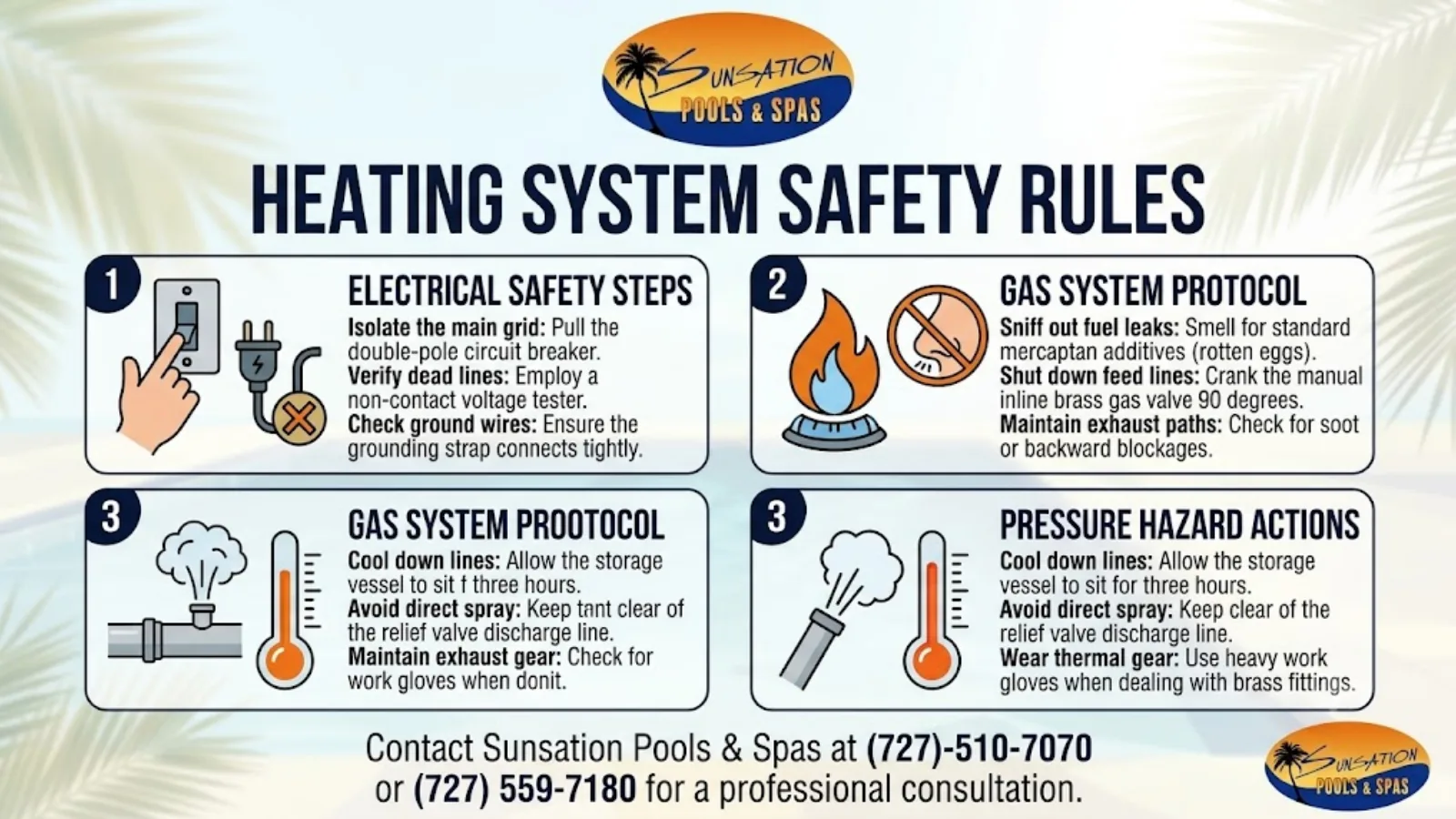
Never bypass safety baselines when inspecting high-voltage hardware or pressurized fuel units. Shutting off your incoming energy grid stops catastrophic field accidents before you open an access panel. Treat every valve and structural casing line as a pressurized hazard.
Electrical Safety Steps
- Isolate the main grid: Pull the double-pole circuit breaker completely before unbolting any access sheets.
- Verify dead lines: Employ a non-contact voltage tester directly on the interior element terminals to prove no current remains.
- Check ground wires: Ensure the copper grounding strap connects tightly to prevent stray electrical arcs.
Gas System Protocol
- Sniff out fuel leaks: Smell for standard mercaptan additives that mimic rotten eggs near your gas control block.
- Shut down feed lines: Crank the manual inline brass gas valve 90 degrees to isolate the unit if you suspect a line leak.
- Maintain exhaust paths: Check the metal draft hood for soot or backward blockages spilling carbon monoxide.
Pressure Hazard Actions
- Cool down lines: Allow the storage vessel to sit unpowered for at least three hours before operating drain lines.
- Avoid direct spray: Keep your body clear of the discharge line tied to your temperature and pressure relief valve.
- Wear thermal gear: Use heavy work gloves when dealing with brass fittings near the hot water outlet loop.
(727)-510-7070 or (727) 559-7180
How Do You Know When to Call a Certified Service Technician?
Isolate structural failures from basic control issues to avoid compounding your plumbing damage. If water pools under the steel base ring or electrical breakers trip instantly after a reset, your system demands immediate field support. Messing with live fuel feeds or compromised steel tanks voids warranties and ruins equipment.
Why Is My Water Heater Not Working?
Identifying why your system failed requires separating incoming energy issues from hardware component degradation. Most total system dropouts stem from fractured electrical paths, calcified heating rods, or broken thermostats. Checking these components systematically exposes the failure point.
What Happens When Electric Elements Burn Out?
Upper and lower electrical heating units submerged inside your tank eventually split apart due to thermal fatigue. When the primary top element snaps, your entire system stays cold. If the lower core shorts out, you will experience brief bursts of lukewarm water that disappear within minutes.
- Test continuous ohms: Hook up a digital multimeter to both screw terminals on the removed element.
- Spot scale fatigue: Scrape off thick white calcium crust that wraps around the copper shielding.
- Match element wattage: Swap out damaged components with identical 4,500-watt replacement parts.
How Do Thermostat Structural Failures Freeze Your System?
Faulty control dials fail to signal internal switches to close, preventing voltage from reaching the core. Mechanical contacts warp over time after thousands of operational cycles.
- Reset safety limits: Push the manual red high-limit ECO button located above your top control panel.
- Calibrate dual controls: Ensure both upper and lower dials mirror each other perfectly within five degrees.
- Replace loose sensors: Verify the flat backing of your thermostat presses tight against the steel tank inner wall.
Why Does Your Electrical Breaker Keep Tripping?
A water heater that repeatedly shuts down your electrical box signals a direct short-to-ground malfunction. Water leaking through cracked element jackets hits live lines instantly.
- Inspect terminal housings: Look for black burn paths inside your upper wiring enclosure box.
- Check wire size: Confirm your branch line utilizes minimum 10-gauge copper wire on a dedicated 30-amp circuit.
- Stop manual resets: Refrain from pushing a tripped breaker back on more than once without diagnosing the short.
What Blocks Your Gas Unit From Heating?
Gas-fired burners cannot ignite when supply pressures drop or when pilot assemblies clog with carbon.
- Watch flame colors: Ensure your pilot light burns crisp blue instead of lazy, flickering yellow.
- Clean thermocouple tips: Sand down dark carbon soot from the metal sensor rod over your pilot.
- Confirm valve positions: Trace your iron supply pipe to make sure the handle parallels the gas line.
How Do You Solve Common Tankless System Dropouts?
Tankless units provide on-demand thermal transfer but shut down instantly when scale blocks their compact heat exchangers. These systems depend on precise flow rates and clear ventilation pathways to trigger their computerized firing sequences.
Tankless Operational Risks
- Clear mineral scaling: Flush the internal copper heat exchanger using food-grade virgin white vinegar for 60 minutes annually.
- Unclog intake screens: Pull the inline cold water inlet filter mesh out to rinse away trapped municipal pipe rust.
- De-ice external vents: Keep incoming air intake PVC pipes clear of localized debris or heavy external blockages.
- Prevent immediate cycling: Install a compact inline buffer tank to combat the classic cold-water sandwich effect.
What Causes Smelly or Discolored Hot Water to Flow From Your Faucets?
Stagnant well water and deteriorating metal rods create chemical reactions inside your tank that alter water clarity and odor. When incoming minerals react with failing protective components, your hot water supply degrades quickly.
| Water Symptom | Direct System Cause | Immediate Correction Strategy |
| Rotten Egg Odor | Sulfur-Reducing Bacterial Bloom | Flush system with hydrogen peroxide and sanitize lines. |
| Rusty Orange Tint | Sacrificial Anode Rod Depletion | Extract worn rod and install a new magnesium core. |
| Metallic Aftertaste | Internal Steel Tank Corrosion | Plan structural tank replacement before metal walls split. |
| Milky White Output | Heavy Micro-Bubble Aeration | Let water sit for two minutes to confirm air dissipates. |
How Do You Identify and Stop Structural Water Heater Leaks?
Address pooling water immediately to prevent structural wood rot and expensive drywall damage. Pinpointing whether water escapes from a threaded fitting or a fractured inner tank liner determines your repair path.
System Pressure Points
- Threaded Supply Lines: Tighten loose copper flex connectors or replace old rubber washers on top inlets.
- Temperature & Pressure Relief Valve: Replace the brass T&P valve if it continuously weeps water under normal operating temperatures.
- Brass Drain Valve: Install a threaded brass cap over a dripping plastic drain spout that fails to seat fully.
- Internal Core Breach: Replace the entire water heater if water flows out from the bottom metal casing seams.
Why Is Your Utility Tank Making Strange Sounds?
Loud popping, knocking, or cracking noises signal that solid mineral debris has trapped water beneath a heavy layer of sediment. As the burner fires, trapped water turns to steam and explodes through the sludge crust.
Acoustic Risk Diagnostics
- Sediment Calcification: Drain the bottom of the tank to clear out hardened lime nuggets.
- Water Hammer Vibrations: Install an expansion tank or water hammer arrestor on your main cold line.
- Element Scale Crackle: Pull electric elements out to clean off thick calcium scale build-ups.
How Does Florida Humidity and Demand Create Tank Condensation?
Cold water entering a hot tank in humid conditions creates surface moisture that looks like a serious structural leak. This issue surfaces regularly during intense summer weather patterns.
Environmental Factors
- Heavy Thermal Gradients: Do not panic when cold well water hits a hot tank during morning draw periods.
- New System Fill-Ups: Allow your newly installed unit 24 hours to reach stable operating temperatures.
- High Atmospheric Moisture: Improve air circulation around your utility closet to burn off localized Largo humidity.
What Causes Gas Control Valve and Burner Structural Failures?
Mechanical gas valves and burner rings fail when moisture rusts out ports or internal magnets fail to hold. If fuel lines are clear but your burner remains dark, the control mechanism has likely failed.
🛠️ Combustion Components
- Gas Control Blocks: Swap out defective internal regulators that fail to deliver fuel downstream safely.
- Burner Ring Corrosions: Clean off flaking rust scale from burner ports using a stiff wire brush.
How Can You Prevent Future Water Heater Failures?
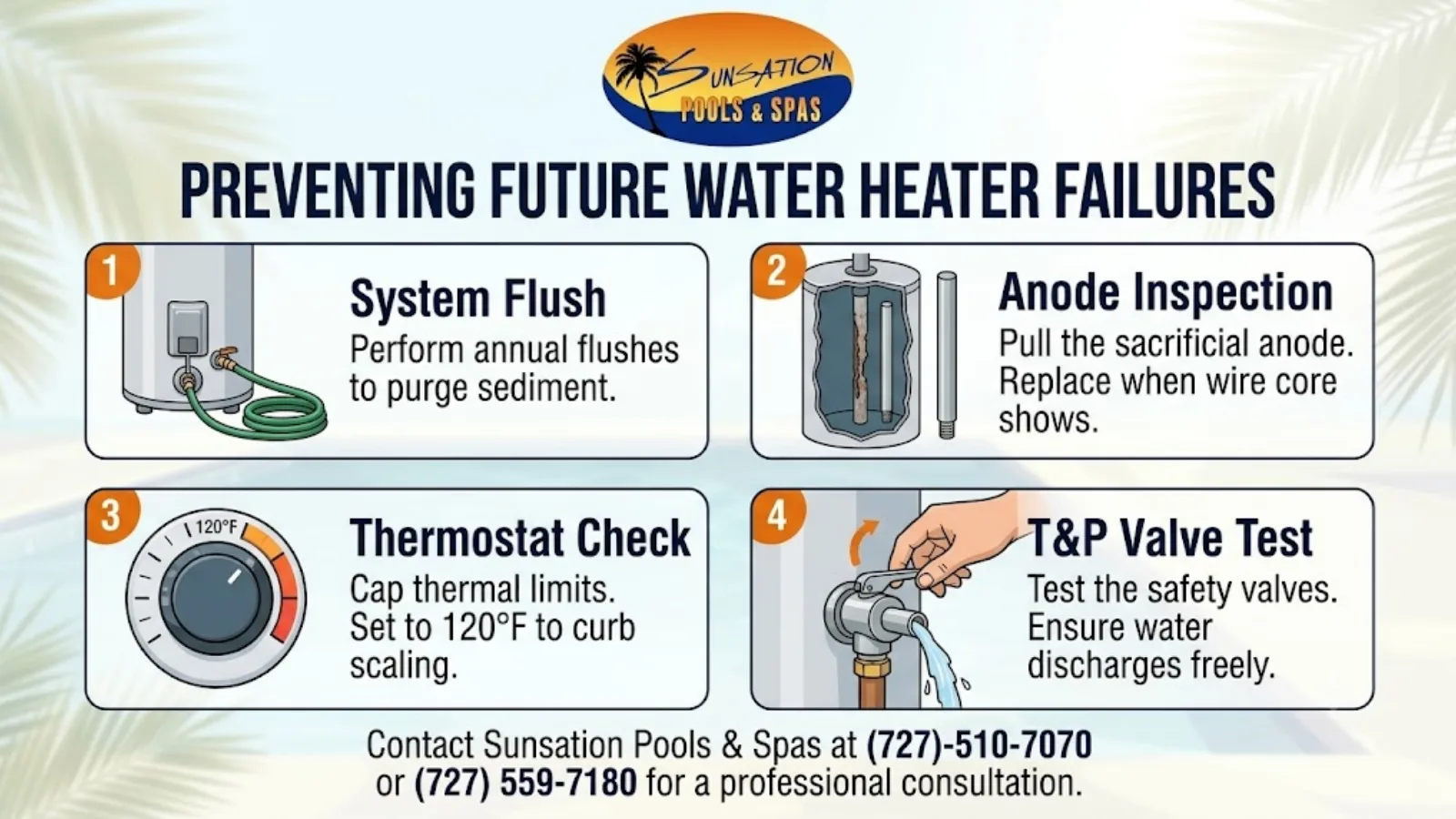
Executing a strict preventive maintenance checklist stops major system breakdowns before they flood your home. Consistent care protects your equipment from aggressive local water conditions.
(727)-510-7070 or (727) 559-7180
- Perform annual flushes: Hook up a garden hose to the bottom drain valve to purge sediment chunks out of the tank base.
- Pull the sacrificial anode: Replace your internal rod once the wire core shows through its zinc or magnesium cladding.
- Cap thermal limits: Set your thermostat to exactly 120°F to curb scaling and prevent hot water burns.
- Test the safety valves: Lift the silver lever on your pressure relief valve to ensure water discharges freely.
Why Largo Homeowners Trust Local Water System Experts
Property owners throughout Largo, Florida face unique challenges from high groundwater minerals and coastal humidity. Maintaining commercial pool heaters, residential spa systems, and primary water loops demands specialized diagnostic knowledge.
Sunsation Pools & Spas delivers top-tier structural support, comprehensive system overhauls, and equipment installations across the Tampa Bay area. Our field technicians understand how local environmental stressors wear down infrastructure. If you are struggling to maintain your home’s water systems, Call (727) 510-7070 to speak with a field specialist about optimizing your property’s plumbing and water setups today. Visit our website and contact us today!
Frequently Asked Questions
Q: Why is my water heater not working after a power outage?
A: A power surge often trips the high-limit safety switch or ruins the digital control board during grid re-energization. Open your top panel cover and firmly depress the red ECO reset button to restore power. If your system remains dead, check for a blown fuse or a tripped double-pole breaker inside your main electrical panel.
Q: How many years does a standard water heater last?
A: Most conventional tank water heaters provide reliable service for 8 to 12 years before tank metal breaks down. Tankless models can operationalize for up to 20 years if you regularly descale the heat exchanger loop. Neglecting your sacrificial anode rod can cut these operational lifespans in half due to aggressive internal corrosion.
Q: Why does my hot water run out so much faster than before?
A: A broken lower heating element or a shattered internal dip tube causes hot water volume to drop sharply. When your dip tube cracks, cold incoming water mixes immediately with hot water at the top of the tank. This structural issue delivers lukewarm water to your faucets shortly after you turn them on.
Q: Is it safe to leave a leaking water heater turned on?
A: No, leaving a leaking water heater powered up invites severe structural damage and electrical short-circuit hazards. Standing water can easily contact live internal wires or cause your gas control block to malfunction. Shut off the dedicated circuit breaker or turn off the manual gas valve immediately, then close your cold water supply inlet.
Q: How often should I drain and clean out my water heater tank?
A: You should perform a complete system flush every 12 months to clear out accumulated mineral sediment. Homes drawing water with heavy lime content should increase this routine to every 6 months. Keeping the base of your tank clean prevents element burnouts and stops loud popping noises during heating cycles.