

(727)-510-7070 or (727) 559-7180
Retrofitting your swimming pool with a dedicated heating system transforms how you use your backyard space. If you’re wondering, can you add a heater to an existing pool, the answer is yes. At Sunsation Pools & Spas, Inc., we know St. Petersburg homeowners frequently face a distinct problem where bone-chilling winter cold snaps and windy October nights turn an expensive backyard investment into an unusable block of cold water. Integrating an aftermarket heater into your current setup fixes this issue completely.
Key Takeaways
- Maximize Property Utility: Upgrade your existing pool setup at any point post-construction without ripping up your structural deck footprint.
- Select Proper Machinery: Deploy gas plumbing, dedicated electric heat pumps, or rooftop solar panels to hit your target water temperature.
- Verify System Infrastructure: Audit your existing equipment pad space, breaker box amperage, and gas line capacity before purchasing hardware.
- Minimize Thermal Loss: Install a thick thermal pool cover alongside your new machinery to trap BTU output and slash monthly energy overhead.
- Protect Equipment Warranties: Secure professional plumbing and electrical mechanical hookups to preserve factory hardware coverage and ensure operational safety.
How Easy Is It to Retrofit a Heating System?
Yes, you can add a heater to an existing pool by cutting into your current filtration return lines and running dedicated power or gas utilities to your equipment pad. Most concrete or vinyl structures easily accept secondary hardware integration post-construction. The installation process relies entirely on your home’s existing utility infrastructure and physical equipment pad clearance.
Why Do Homeowners Wait to Install a Heater?
The reality on the ground is that many families cut out heating systems during initial builds to save money. Later, they realize the water stays unusable for six months out of the year. Adding a heater lets you reclaim your investment.
- Extend Swimming Windows: Keep water temperatures hovering around 85 degrees even during chilly November mornings.
- Protect Family Comfort: Stop shivering during late-night weekend swims or early morning low-impact cardio workouts.
- Boost Capital Value: Increase the total market appeal of your outdoor amenities for future buyers looking for turnkey setups.
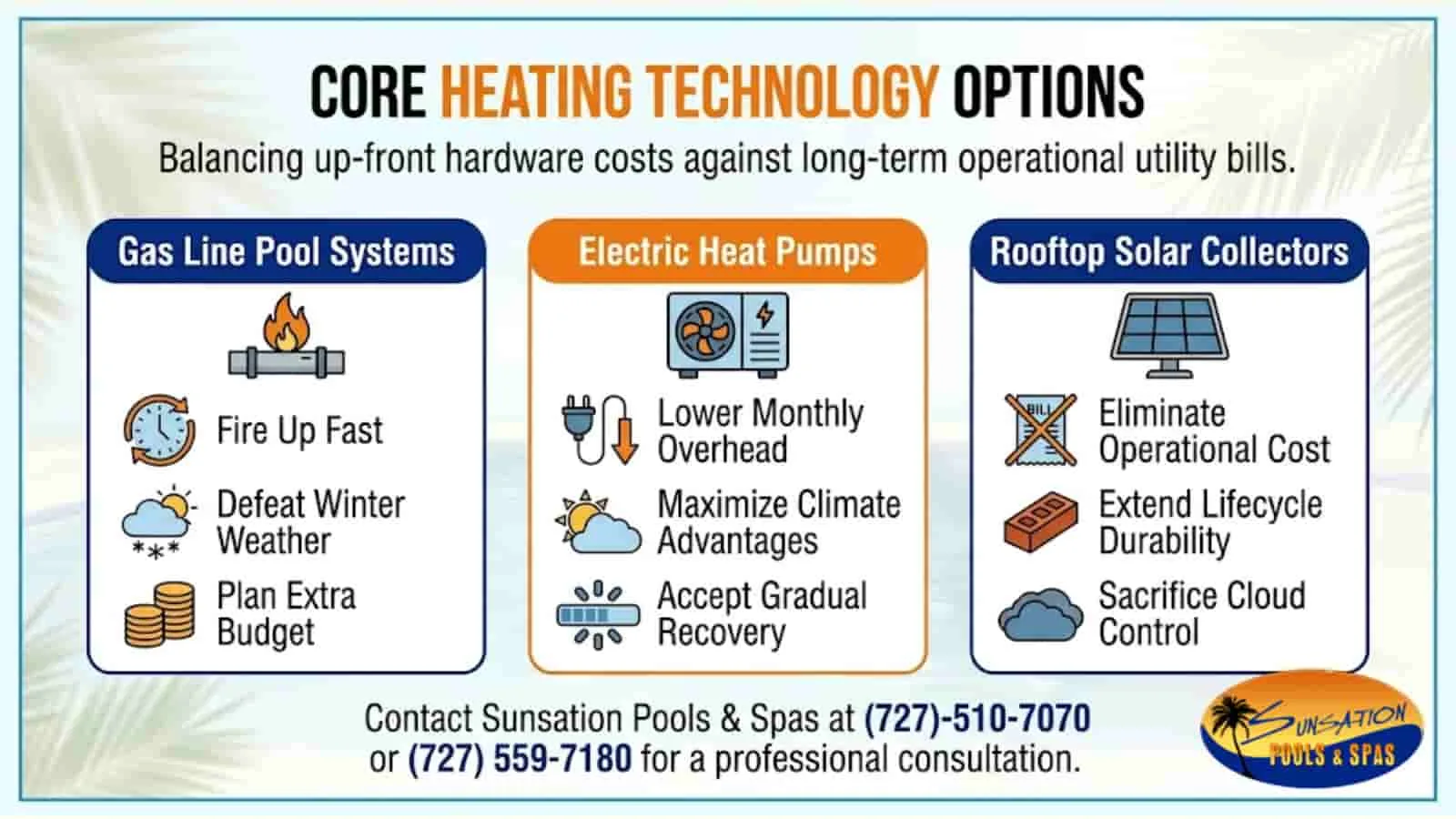
What Are Your Core Heating Technology Options?
Choosing the right system requires balancing up-front hardware costs against long-term operational utility bills. Homeowners must select between rapid heating speeds and sustained monthly energy efficiency based on how they actually use their pool.
Gas Line Pool Systems
These mechanical systems burn pressurized natural gas or liquid propane inside a combustion chamber to transfer immediate raw BTUs directly into your plumbing line.
- Fire Up Fast: Raise water temperatures by several degrees per hour regardless of the ambient air temperature outside.
- Defeat Winter Weather: Maintain hot spa conditions even during the absolute coldest St. Petersburg December cold fronts.
- Plan Extra Budget: Account for the operational reality of fluctuating propane prices and high-consumption fuel burning.
Electric Heat Pumps
These units pull ambient heat directly out of the warm humid air, compress it via a specialized refrigerant cycle, and transfer that warmth into your pool water.
- Lower Monthly Overhead: Achieve massive energy efficiency by drawing fractional electricity compared to old-school resistance elements.
- Maximize Climate Advantages: Capitalize on standard Florida humidity levels to fuel your daily heating cycles.
- Accept Gradual Recovery: Acknowledge that heat pumps warm pools slowly and lose efficiency when air drops below 50 degrees.
Rooftop Solar Collectors
This setup pumps water out of your main filter and pushes it directly through black polymer solar collection mats mounted to your roof.
- Eliminate Operational Cost: Harvest raw thermal energy straight from the sun for zero dollars in monthly utility bills.
- Extend Lifecycle Durability: Reduce mechanical wear and tear since these configurations lack compressors or complex heat exchangers.
- Sacrifice Cloud Control: Rely completely on clear sunny skies to generate actual thermal performance on any given afternoon.
(727)-510-7070 or (727) 559-7180
What Requirements Must Your Property Meet?
Before buying any heavy equipment, your current pad configuration must pass a rigorous physical space and utility infrastructure assessment. Skipping these checks leads to system failures or unexpected electrical blowouts.
The Strategic Blueprint for Hardware Retrofitting
- Clear Pad Footprint: Measure structural clearance around your filter.
- Maintain 24 inches of clear air space for proper unit exhaust ventilation.
- Pour a concrete pad extension if your current layout lacks structural ground footprint.
- Re-Route Return Plumbing: Splice new PVC lines into your existing plumbing.
- Glue clear check valves directly between your chlorinator and the heater core.
- Prevents raw chlorine backflow from destroying your expensive internal copper heat exchangers.
- Upgrade Electrical Sub-Panels: Check your main home breaker capacity.
- Pull a dedicated 50-amp, 240-volt circuit out to the equipment pad for heat pumps.
- Hire an electrician to verify your home panel can handle the extra electrical demand.
- Run Underground Utility Lines: Trench necessary supply channels to your pad.
- Drop high-capacity gas lines directly from your main meter for gas heaters.
- Ensure lines meet local building codes for deep underground burial depth.
How Do Different Systems Compare on Daily Performance?
Operational Performance Comparisons
| Heating Mechanism | Upfront Equipment Cost | Daily Heating Velocity | Ideal St. Petersburg Use Case |
| Natural Gas / Propane | Moderate Initial Outlay | High-Speed Output | Weekend spa users and quick on-demand party heating. |
| Electric Heat Pump | Higher Capital Cost | Gradual Steady Increase | Constant daily swimmers seeking uniform baseline temperatures. |
| Solar Collectors | Premium Installation Cost | Low Weather-Dependent | Budget-conscious owners wanting free baseline warmth. |
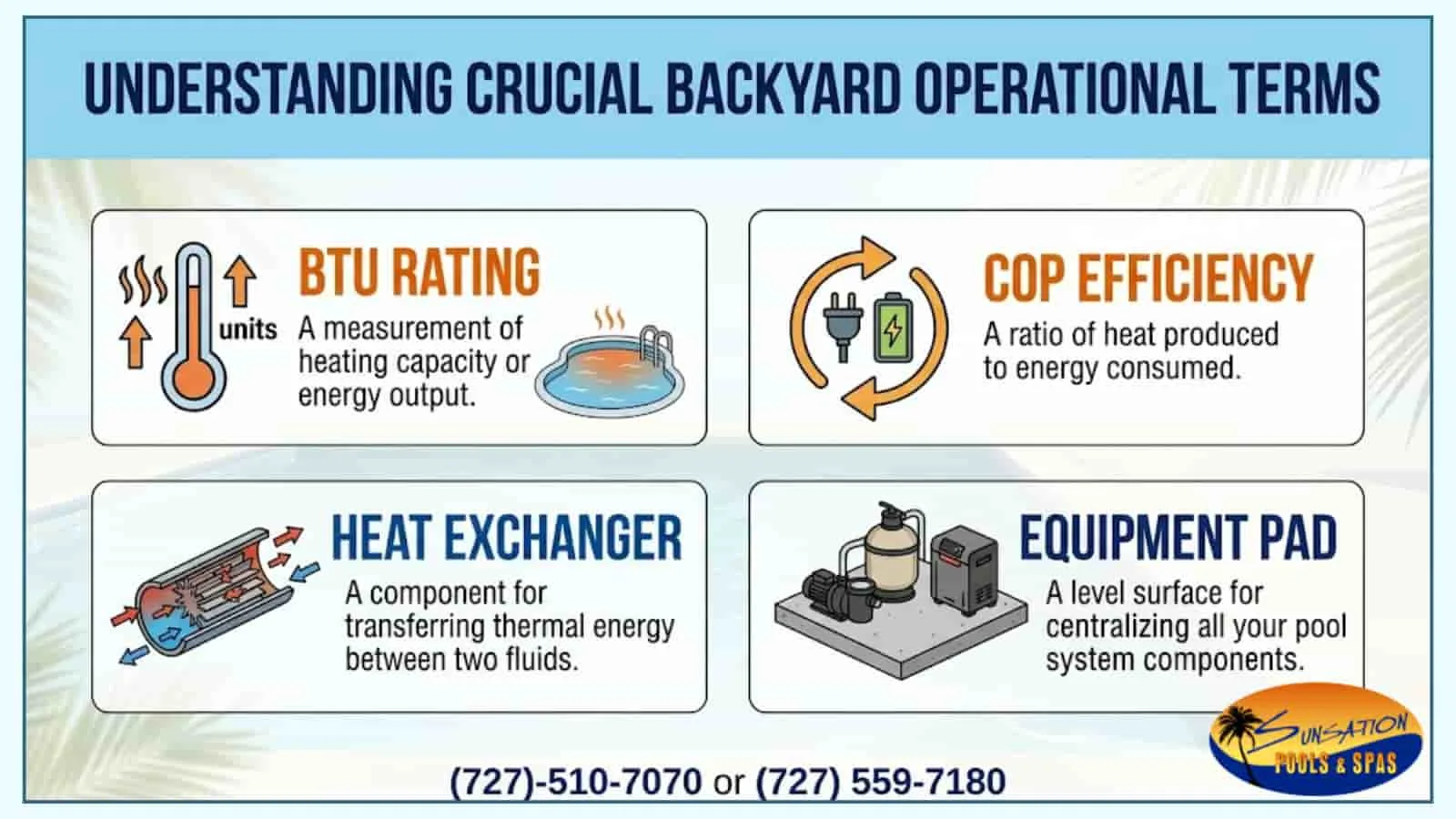
Understanding Crucial Backyard Operational Terms
- BTU Rating: British Thermal Units measure the precise thermal energy output capacity of your brand-new machinery.
- COP Efficiency: Coefficient of Performance tracks exactly how much energy a heat pump outputs relative to the electricity it consumes.
- Heat Exchanger: A heavy-duty internal titanium or cupro-nickel tube assembly that safely transfers raw heat into your flowing water.
- Equipment Pad: The solid structural concrete slab that anchors your pump, filter, heater, and automated chlorination systems.
(727)-510-7070 or (727) 559-7180
Backyard Advice for Smart Pool Owners
Here’s the part most pool companies won’t tell you: buying a big heater without buying a heavy-duty pool cover is a complete waste of cash. Evaporation is responsible for roughly 70% of total pool heat loss. If you leave your pool uncovered during cold St. Petersburg nights, your brand-new system will work overtime just to heat the open sky, driving your electric or gas bills straight through the roof. Always deploy a solid solar blanket to lock in those hard-earned BTUs.
Putting Your Heating Strategy into Motion
Upgrading your backyard oasis with a dedicated heater changes everything about how you use your property. Our professional team handles everything from initial gas line permitting to high-voltage electrical hookups and seamless plumbing integration. Stop staring at a cold, unused swimming pool. Take action to claim a warm, resort-style swimming experience right in your backyard.
Your Action Plan to Warm Water
- Schedule Site Audit: Let our field technicians map out your equipment pad clearances and electrical sub-panels.
- Select System Sizes: Run precise manual heat load calculations to match equipment BTUs to your pool’s surface area.
- Execute Clean Install: Complete full mechanical plumbing, utility integration, and system programming within three business days.
Get a clear, professional assessment of your equipment pad by reaching out to the service experts at Sunsation Pools & Spas, Inc.Call (727) 510-7070 to finalize your pool upgrade options. Visit our website and contact us today!
Frequently Asked Questions
Q: How long does a standard pool heater installation take?
A: Most standard equipment retrofits take one to three business days to fully complete. This window accounts for setting the pad, running secondary PVC plumbing lines, and connecting required high-voltage electrical or gas utilities.
Q: Which specific pool heater is best for Florida weather?
A: Electric heat pumps offer the absolute best year-round efficiency for coastal Florida neighborhoods. They capitalize on high ambient humidity and warm daytime air to drop your daily heating bills significantly.
Q: Will adding a new pool heater increase my home’s overall value?
A: Yes, adding functional heating equipment builds serious buyer demand in competitive real estate markets. Homebuyers actively seek out year-round usable outdoor amenities that don’t require immediate after-market upgrade costs.
Q: Do I absolutely have to use a pool cover if my heater is running?
A: Covers aren’t legally mandatory, but running a system without one burns unnecessary money. Thermal blankets block massive overnight evaporation losses, slashing your ongoing monthly fuel or electric consumption by more than half.
Q: What yearly maintenance do these heating systems require?
A: You must schedule a mechanical inspection every year to clean out scale deposits and check electrical contactors. Clearing out internal debris and monitoring your chemical balances prevents chemical corrosion from destroying the internal exchanger cores.

